
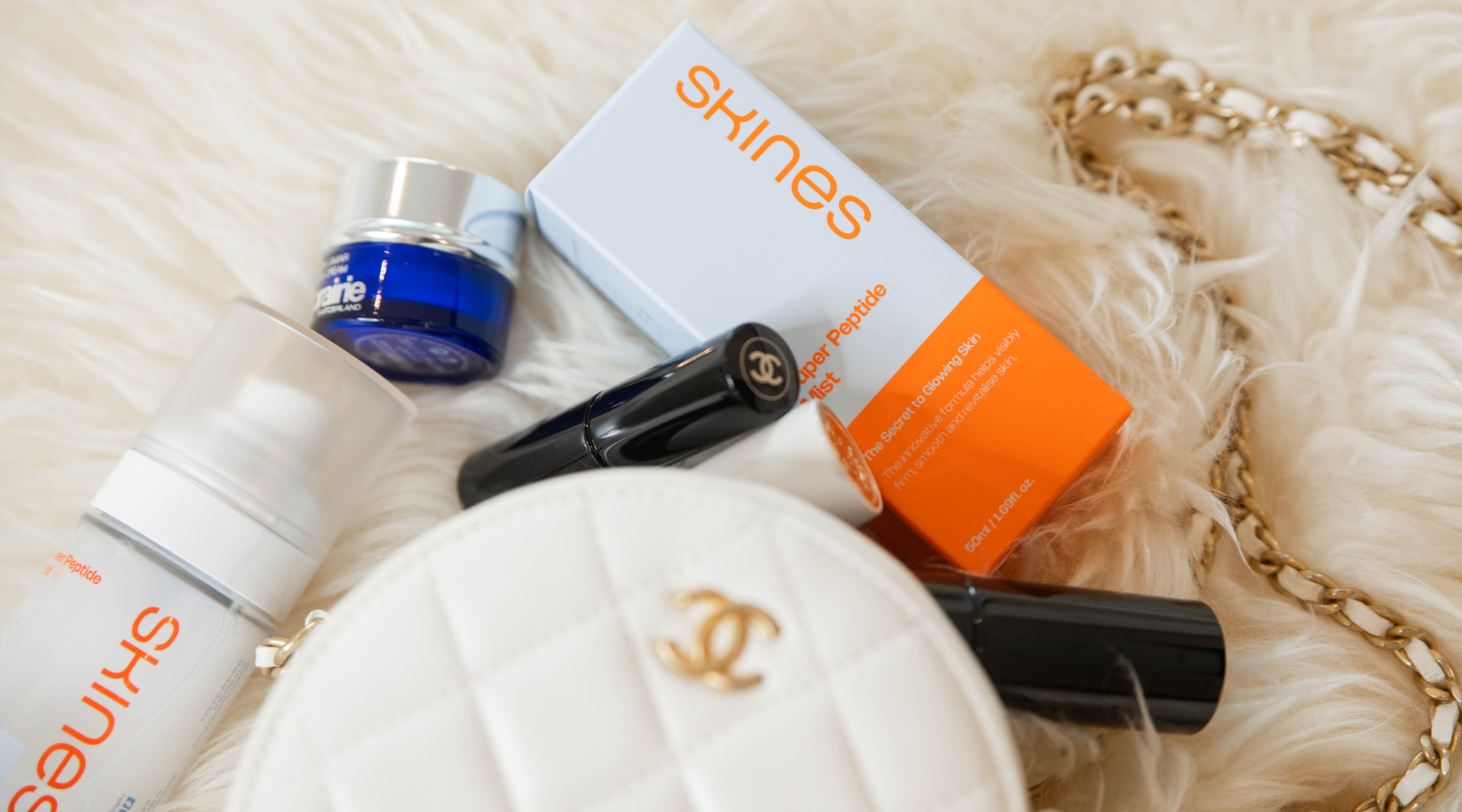
Why Your Collagen Cream Isn't Working? (And What to Use Instead)
Because the molecules are too large to penetrate your skin. Dermatology research establishes that molecules above approximately 500 daltons cannot cross the outermost skin layer. Most collagen creams and serums contain molecules many times this size. They soften the surface temporarily but cannot reach the dermis where collagen synthesis actually occurs.
Three things need to happen for collagen skincare to actually work: the right collagen type (Type I marine), molecules small enough to penetrate (under 500 daltons), and a delivery format that maximises skin contact time.
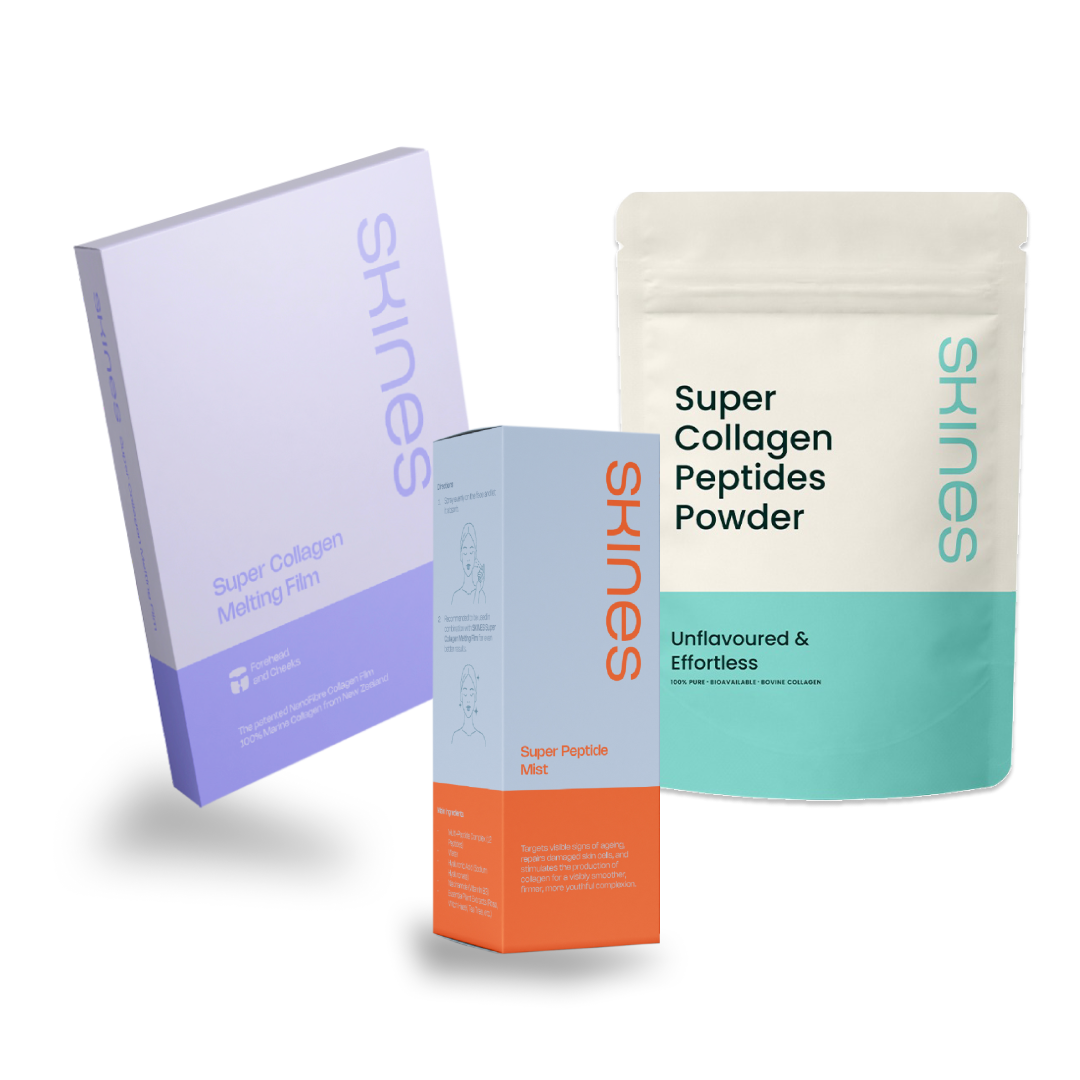
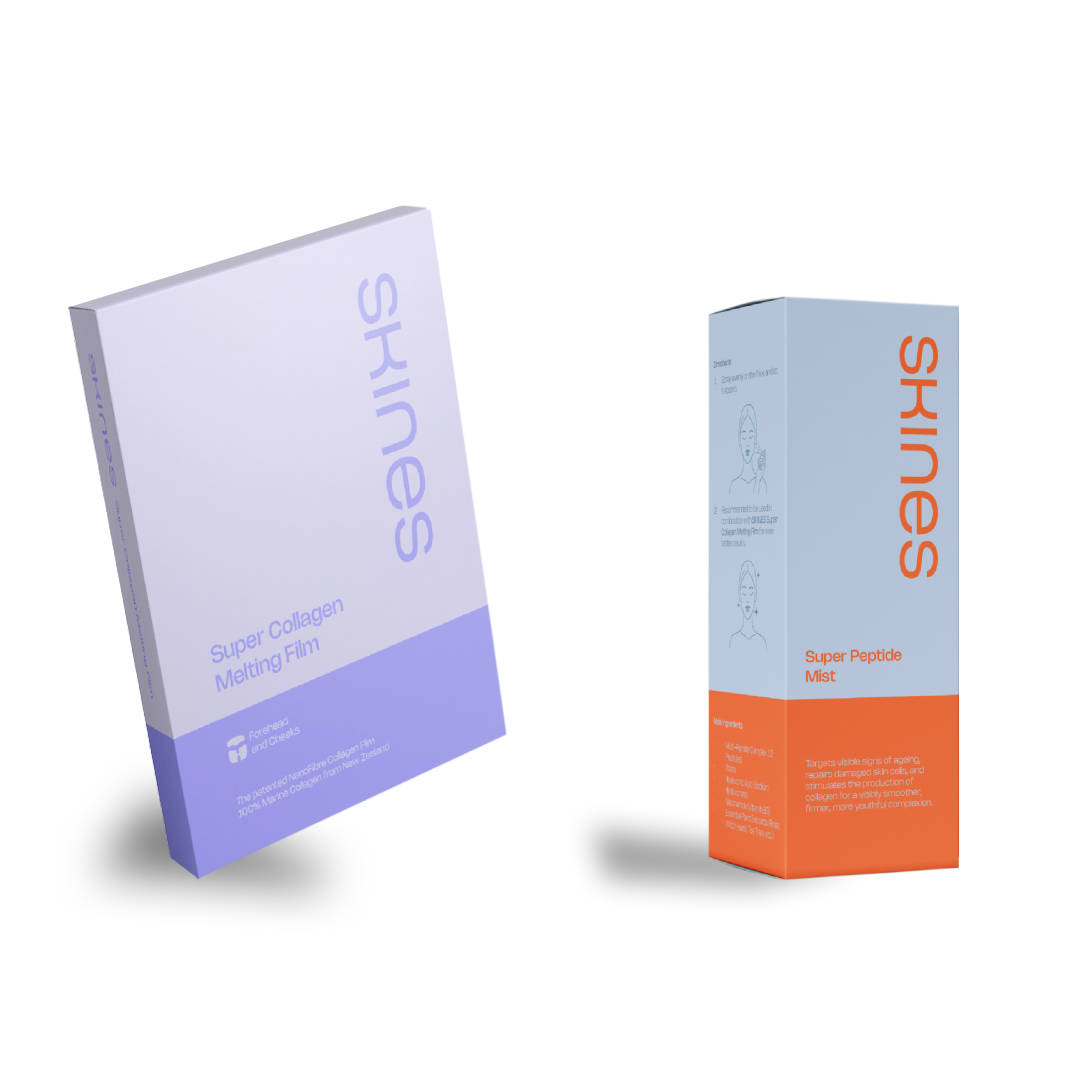
The SKINES Super Collagen Melting Film solves all three using patented NanoFibre Technology that reduces marine collagen to under 300 daltons, genuine transdermal penetration rather than surface hydration. Combined with the Super Peptide Mist and Collagen Peptides Powder, it forms the most complete collagen system available in Australia.
500
Daltons: the maximum molecule size that can penetrate skin
<300
Daltons: SKINES NanoFibre collagen molecule size
90%
Of skin collagen is Type I, what marine collagen provides
1%
Annual collagen loss from age 25, accelerating each decade
In this guide
- Why most collagen creams do not work
- The 500-dalton rule: the science most brands ignore
- What collagen your skin actually needs
- The three conditions for collagen skincare to actually work
- Collagen cream vs collagen film vs collagen powder: what is the difference?
- What peptides do that collagen creams cannot
- The SKINES collagen system: how it solves every limitation
- How to build a collagen routine that actually delivers results
- Find your right collagen product
- Frequently asked questions
You have spent real money on collagen creams. You have applied them consistently, morning and night, and waited for the firmer, plumper, more radiant skin promised on the packaging. And the results have been, at best, marginal. At worst, you feel like you wasted it entirely.
You are not doing it wrong. The products are.
The collagen skincare industry is built on a fundamental misunderstanding that most brands either do not know about, or choose not to tell you. Most collagen molecules are physically too large to enter your skin. They sit on the surface, create a temporary soft feel, and wash off. The dermis, where collagen synthesis actually happens, is never reached.
This guide explains the science behind why, what actually works instead, and how to build a collagen routine that can produce genuine, visible, structural skin results.
Why Most Collagen Creams Do Not Work
The premise of a collagen cream sounds entirely logical. Skin loses collagen with age. Apply collagen to the skin. Problem solved. The reality is more complicated, and the gap between the premise and the biology is where billions of dollars in skincare spend disappear every year.
Your skin is designed, with extraordinary precision, to keep things out. The outermost layer, the stratum corneum, functions as a highly selective barrier that prevents external substances from entering the body. It is exactly this function that protects you from environmental toxins, bacteria, and allergens. The same mechanism that protects you also prevents most skincare ingredients from reaching the dermis, which is the only layer of skin where any meaningful structural change can occur.
The dermis sits beneath the epidermis, separated by a basement membrane. This is where fibroblasts (the cells that produce collagen) live, where the extracellular matrix is maintained, and where all the structural work of skin happens. A product applied to the surface of the skin must cross both the stratum corneum and the epidermis to reach the dermis. Most collagen molecules in standard creams and serums never make it.
When a collagen cream makes your skin feel soft immediately after application, that is a surface effect: the cream forms a temporary film on the skin that reduces water evaporation and creates a plumping sensation. It is the same mechanism as a good moisturiser. It feels like it is working, but the collagen is not being absorbed. It is sitting on top of your skin until you wash it off.
The 500-Dalton Rule: The Science Most Brands Ignore
In 1964, dermatology researchers established what became known as the 500-dalton rule: only molecules with a molecular weight below approximately 500 daltons can reliably penetrate the stratum corneum and reach the viable skin layers beneath.
This finding has been replicated and confirmed across decades of dermatological research. It is not a fringe theory. It is one of the most established principles in cosmetic science, and it has enormous implications for how we should think about skincare ingredients.
Where collagen creams fall on this scale
Native, unprocessed collagen has a molecular weight of approximately 300,000 daltons. That is 600 times larger than the maximum size that can penetrate skin. Even when collagen is hydrolysed (broken into smaller peptide chains, as most supplements and some serums are), the resulting molecules typically range from 3,000 to 10,000 daltons in standard products, still well above the penetration threshold.
This means the collagen in the vast majority of creams, serums, and masks applied to your skin is going nowhere. It is hydrating the surface, it may be brightening, it might reduce the appearance of fine lines temporarily through a physical plumping effect, but it is not reaching the dermis, it is not stimulating fibroblasts, and it is not producing new collagen.
Native collagen: approximately 300,000 daltons
Standard hydrolysed collagen (most creams and serums): 3,000 to 10,000 daltons
Skin penetration threshold: approximately 500 daltons
SKINES NanoFibre collagen: under 300 daltons, genuinely below the threshold
Why brands do not tell you this: The claim "collagen cream" is not technically a lie. The cream contains collagen. But the implication that applying it will restore collagen in your skin is not supported by the science for standard formulations. The industry relies on the surface-softening effect feeling like skincare progress.
What Collagen Your Skin Actually Needs
Not all collagen is the same. Even if delivery were not an issue, using the wrong type of collagen would still limit results. Understanding which type your skin needs is the starting point for any effective collagen strategy.
The Three Conditions for Collagen Skincare to Actually Work
For a topical collagen product to produce genuine, structural skin improvements rather than surface-only effects, three conditions must all be met simultaneously. Most products meet none of them. The best meet one or two. SKINES was designed to meet all three.
Collagen Cream vs Collagen Film vs Collagen Powder: What Is the Difference?
Not all collagen products are trying to do the same thing, and understanding the mechanism of each format helps you choose correctly rather than spending money on the wrong product for your goal.
Swipe to see all columns
| Format | How it works | Reaches dermis? | Stimulates new collagen? | Best for |
|---|---|---|---|---|
| Standard collagen cream | Surface film, temporary plumping | No (molecules too large) | No | Short-term surface hydration only |
| Standard collagen serum | Lightweight surface application | No (still above 500 daltons) | No | Brightening, surface texture |
| SKINES Collagen Film | NanoFibre collagen dissolves into skin | Yes (under 300 daltons) | Yes, stimulates fibroblasts | Genuine structural skin improvement |
| Collagen powder (ingestible) | Systemic absorption via digestion | Via bloodstream (slower) | Yes, provides collagen building blocks | Whole-body collagen support, skin from within |
| Peptide serum/mist | Signals skin to produce its own collagen | Peptides penetrate effectively | Yes, activates fibroblasts via signalling | Collagen activation, daily maintenance |
The most effective approach combines all three active formats. The Collagen Film delivers collagen directly into the dermis. The Peptide Mist activates your skin's own collagen production. The Collagen Powder supports collagen levels from within via the bloodstream. Used together as the SKINES collagen system, they address collagen restoration from three directions simultaneously.
What Peptides Do That Collagen Creams Cannot
Peptides are one of the most important, and most misunderstood, categories in skincare. They are short chains of amino acids (typically 2 to 10 amino acids long) that function as biological messenger molecules, signalling specific cells to perform specific actions.
In the context of collagen, peptides work by signalling your skin's fibroblasts that collagen has been degraded and needs to be replaced. When the skin detects certain peptide sequences, it interprets them as a signal that the extracellular matrix has broken down and upregulates collagen synthesis in response. This is an inside-out mechanism, activating the skin's own production systems rather than supplying collagen externally.
Why peptides succeed where collagen creams fail
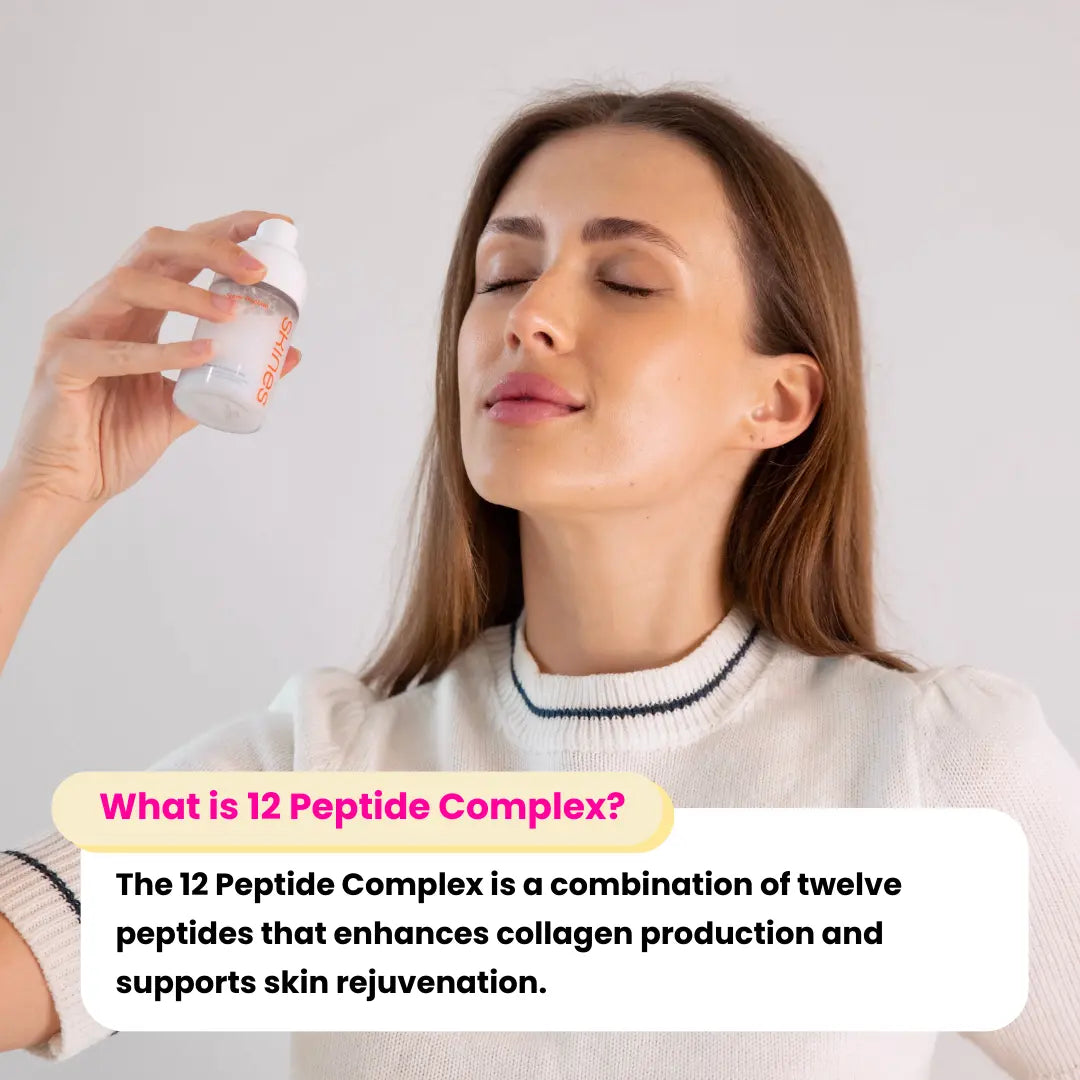
Peptides are significantly smaller than collagen molecules. Many biologically active peptides fall well within the 500-dalton penetration window, allowing them to cross the stratum corneum and reach the viable skin cells beneath. The SKINES Super Peptide Mist contains a 12-Peptide Complex specifically selected for skin signal activity, including the patented marine extract Epseama, which reduces visible roughness and promotes a more even skin surface.
The result is a collagen activation mechanism that runs alongside and complements direct collagen delivery. Peptides tell your skin to make more collagen. The Collagen Film delivers collagen directly. The two mechanisms together are fundamentally more powerful than either approach alone.
Applying the Super Peptide Mist before placing the Collagen Film serves a dual function. First, it begins activating fibroblast signalling in the skin. Second, the moisture from the Mist accelerates the dissolution of the Film and creates an optimal environment for the NanoFibre collagen to penetrate. Misting again over the Film after application continues to aid absorption. This layered application protocol amplifies results significantly compared to the Film used alone.
The SKINES Collagen System: How It Solves Every Limitation
Every product in the SKINES collagen range was designed to address a specific failure point in conventional collagen skincare. Here is how each one works and why it is formulated the way it is.
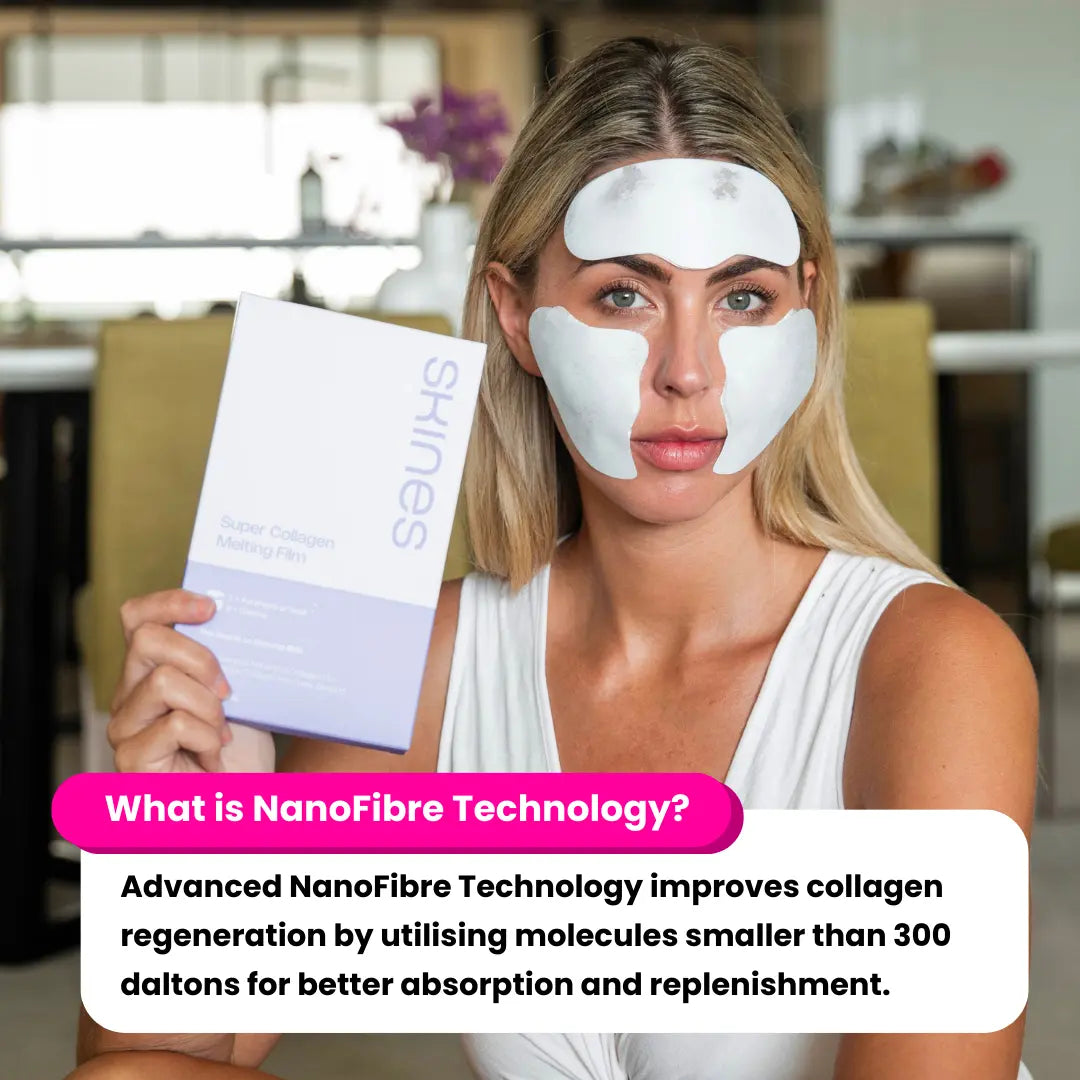
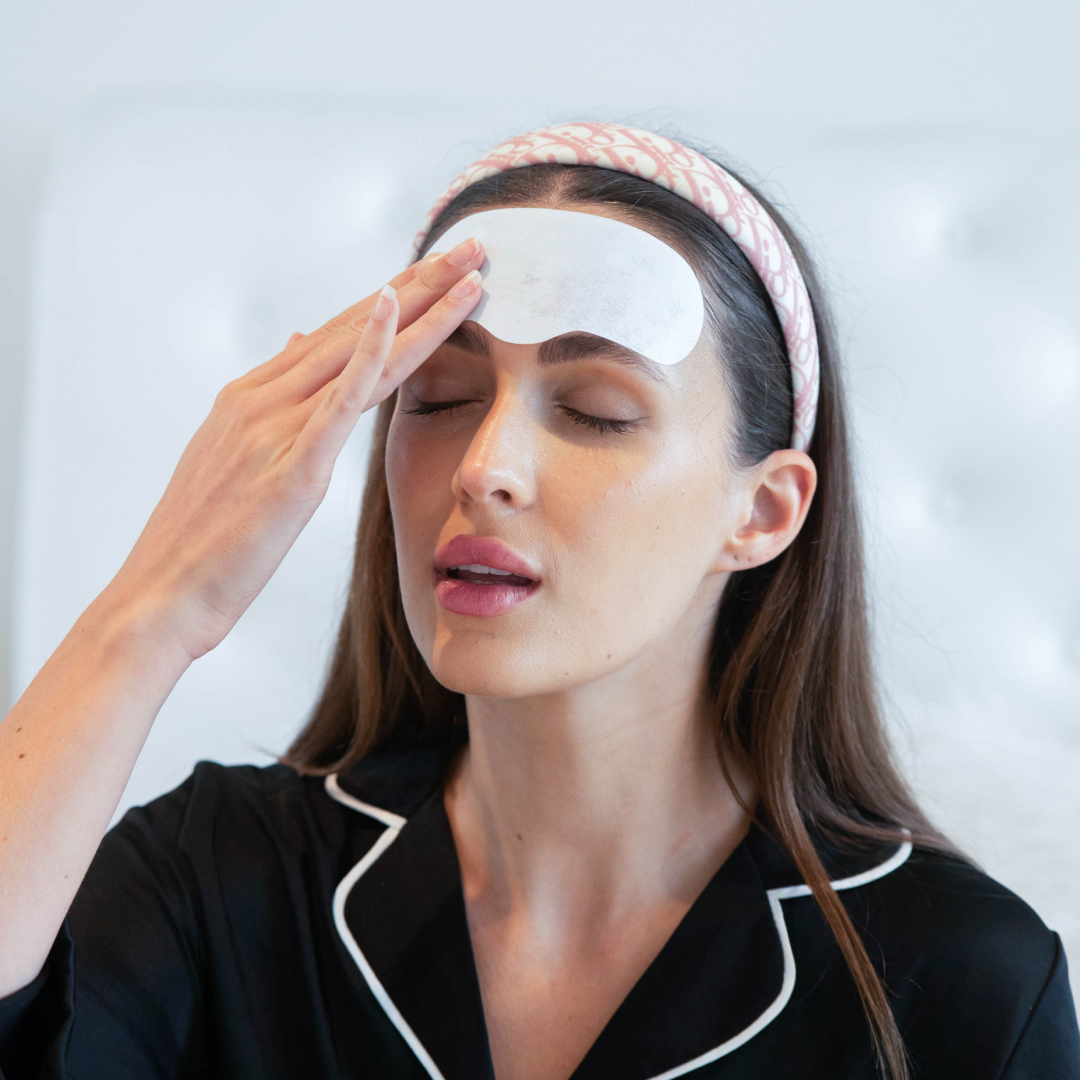
The Super Collagen Melting Film is the direct answer to the collagen cream problem. Where a cream sits on the surface, the Film uses patented NanoFibre Technology to reduce pure marine collagen to under 300 daltons, physically capable of crossing the skin barrier and reaching the dermis. The self-dissolving format keeps collagen in sustained contact with skin for genuine transdermal delivery rather than the few seconds a cream gets before it is rubbed in.
- NanoFibre Technology: reduces marine collagen to under 300 daltons, below the skin penetration threshold, genuine dermis delivery in every application.
- 99.86% purity: three ingredients only, collagen, hydrolysed collagen, and sodium hyaluronate. No fillers, no binders, nothing unnecessary.
- New Zealand source: deep-sea fish from pristine South Sea waters, exceptional collagen purity and minimal contamination risk.
- 30-thread structure: even, concentrated collagen distribution across the entire treatment area, not a thin inconsistent coating.
- Pregnancy-safe: hypoallergenic, paraben-free, sulfate-free, and safe for all skin types including sensitive skin, pregnancy, and breastfeeding.
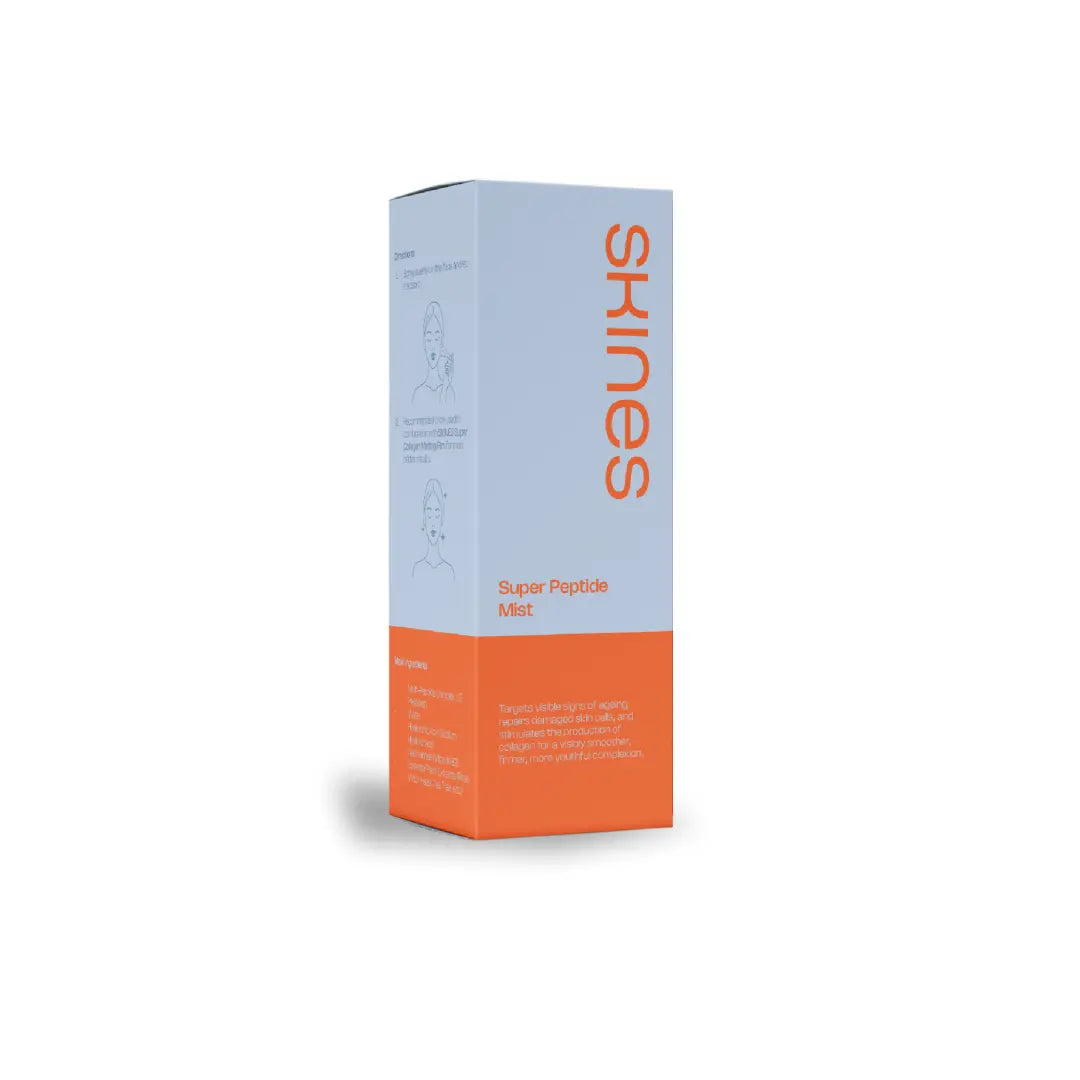
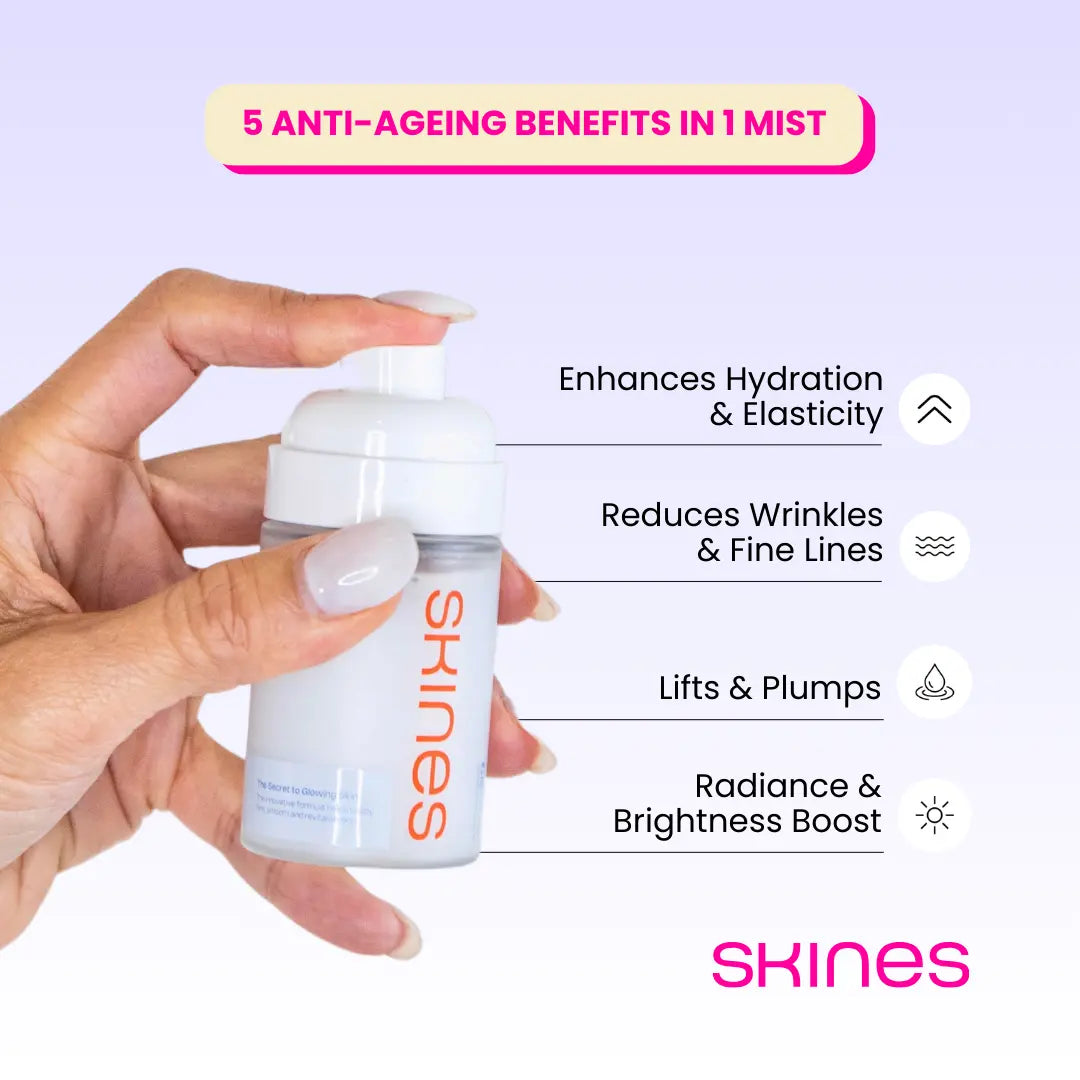
Where the Collagen Film delivers collagen directly, the Peptide Mist activates your skin's own collagen production from within. The 12-Peptide Complex signals fibroblasts that collagen has degraded and triggers synthesis. Used before and over the Collagen Film, it also accelerates dissolution and absorption, creating a layered collagen restoration approach that works from two directions simultaneously.
- 12-Peptide Complex signals skin cells to synthesise new collagen and elastin, the inside-out mechanism that collagen creams cannot replicate.
- Epseama, a patented marine extract, reduces visible roughness and promotes a smoother, more even skin surface with regular use.
- Niacinamide (Vitamin B3) brightens skin tone, reduces the appearance of redness, and strengthens the skin barrier as the foundation for collagen to thrive.
- Use as a daily toner, ampoule, or as the activation step in the Collagen Film protocol for significantly enhanced absorption and results.
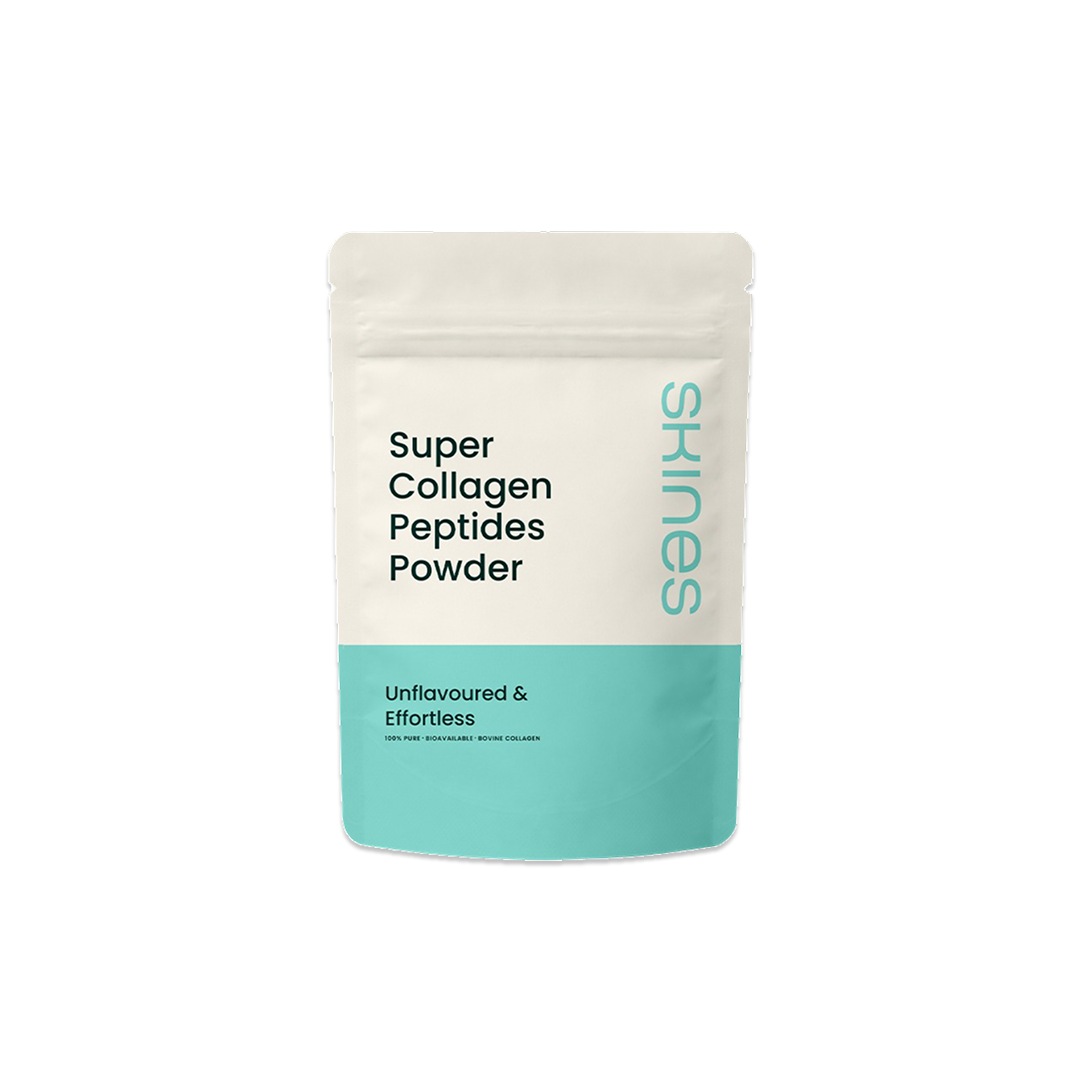
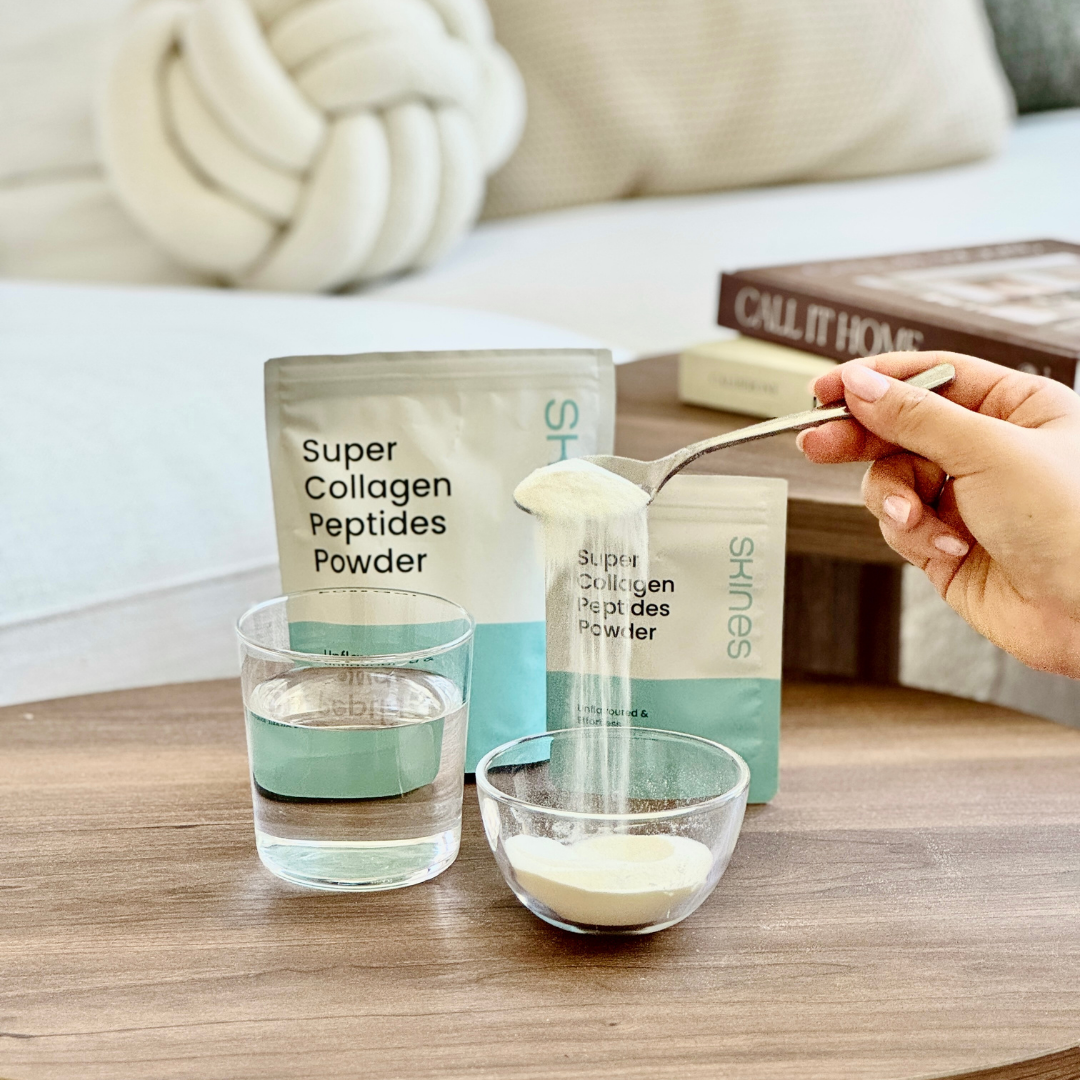
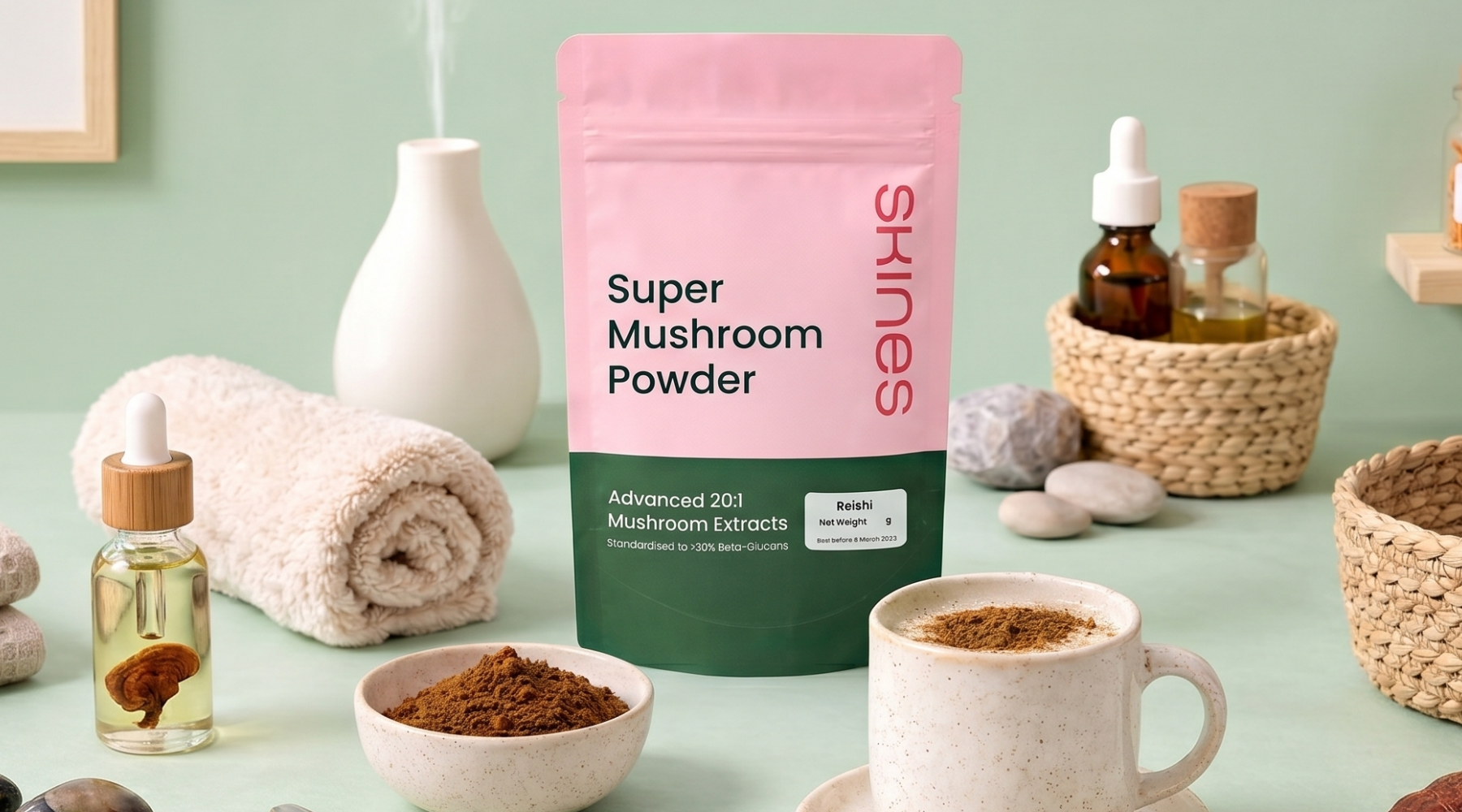
The Collagen Peptides Powder addresses collagen from the inside. When ingested, hydrolysed marine collagen peptides are absorbed through the digestive system, enter the bloodstream, and are distributed to skin, hair, nails, and joints throughout the body. This systemic approach complements the targeted topical delivery of the Collagen Film, creating a complete inside-out collagen restoration strategy.
- Hydrolysed marine collagen peptides are broken into small chains for maximum bioavailability, absorbed efficiently through the gut and distributed systemically.
- Unflavoured and versatile: dissolves cleanly in morning coffee, smoothies, or warm water without affecting taste or texture.
- Supports skin, hair, nails, and joints from within, the systemic dimension that topical-only collagen routines cannot provide.
- Daily consistency produces cumulative benefits. Most users notice improved skin hydration and luminosity at 4 to 6 weeks and more structural improvements at 8 to 12 weeks.
How to Build a Collagen Routine That Actually Delivers Results
The most effective collagen routine combines topical delivery, peptide activation, and inside-out supplementation. Here is how to structure it for maximum results.
Find Your Right Collagen Product
Use this as your shortcut. Each card links directly to the relevant SKINES product.
Topical collagen that actually penetrates
You want a product that delivers collagen to your dermis rather than sitting on the surface. The Film is the answer.
Daily collagen activation and skin prep
You want a lightweight daily product that signals your skin to produce more of its own collagen and works as the activation step for the Film.
Inside-out collagen for skin, hair and nails
You want to support collagen levels throughout your body, not just the skin surface, through daily supplementation.
Complete collagen system, best value
You want the full inside-out approach covering topical delivery, peptide activation, and ingestible collagen in one routine.
Collagen plus mushrooms for skin and wellness
You want to combine collagen restoration with adaptogenic stress protection, since chronic stress is one of the primary accelerators of collagen breakdown.
Subscribe for consistency and savings
Collagen results are cumulative and require consistent daily use. Subscribe and Save ensures you never break the routine and saves up to 25% on every delivery.
The Bottom Line
Your collagen cream is not working because it physically cannot. The molecules are too large to cross the skin barrier, and without reaching the dermis, no amount of collagen applied to the surface will produce structural skin improvement. This is not a niche finding: it is one of the most established principles in cosmetic dermatology, and it has been known for decades.
The solution is not a better cream. It is a fundamentally different approach: molecules small enough to actually penetrate (under 300 daltons), the right collagen type (Type I marine), a delivery format that maximises contact time, peptide activation to stimulate your skin's own production, and ingestible collagen to support the whole system from within.
That is exactly what the SKINES collagen system was designed to deliver. Not surface softening. Not temporary plumping. Structural improvement, from the inside out and the outside in.
Shop the SKINES Collagen SystemFrequently Asked Questions
Why doesn't my collagen cream work?
Can collagen actually penetrate the skin at all?
What is the difference between a collagen cream and a collagen film?
What is NanoFibre Technology?
Do collagen peptides in skincare actually work?
Is it worth taking collagen powder as well as using topical collagen?
How long does it take to see results from SKINES collagen products?
Is the Collagen Melting Film safe for sensitive skin and during pregnancy?
Should I use the Peptide Mist before or after the Collagen Film?
Where can I buy SKINES collagen products in Australia?

Written by Matthew Youn






Leave a comment
This site is protected by hCaptcha and the hCaptcha Privacy Policy and Terms of Service apply.