
Reishi Mushroom for Sleep and Stress: What the Research Says?
Yes, with one important distinction. Reishi is not a sedative and it is not a stimulant. It is an adaptogen, working by regulating your body's stress response system over time rather than forcing an acute effect. Research supports its role in reducing cortisol output, calming the nervous system, and improving sleep quality, particularly the depth and restorative quality of sleep rather than simply making you feel drowsy.
Results are cumulative. Most users notice meaningful changes at 2 to 4 weeks of consistent daily use. Taking it in the evening is the most effective protocol for sleep support, and consistency is more important than dose.
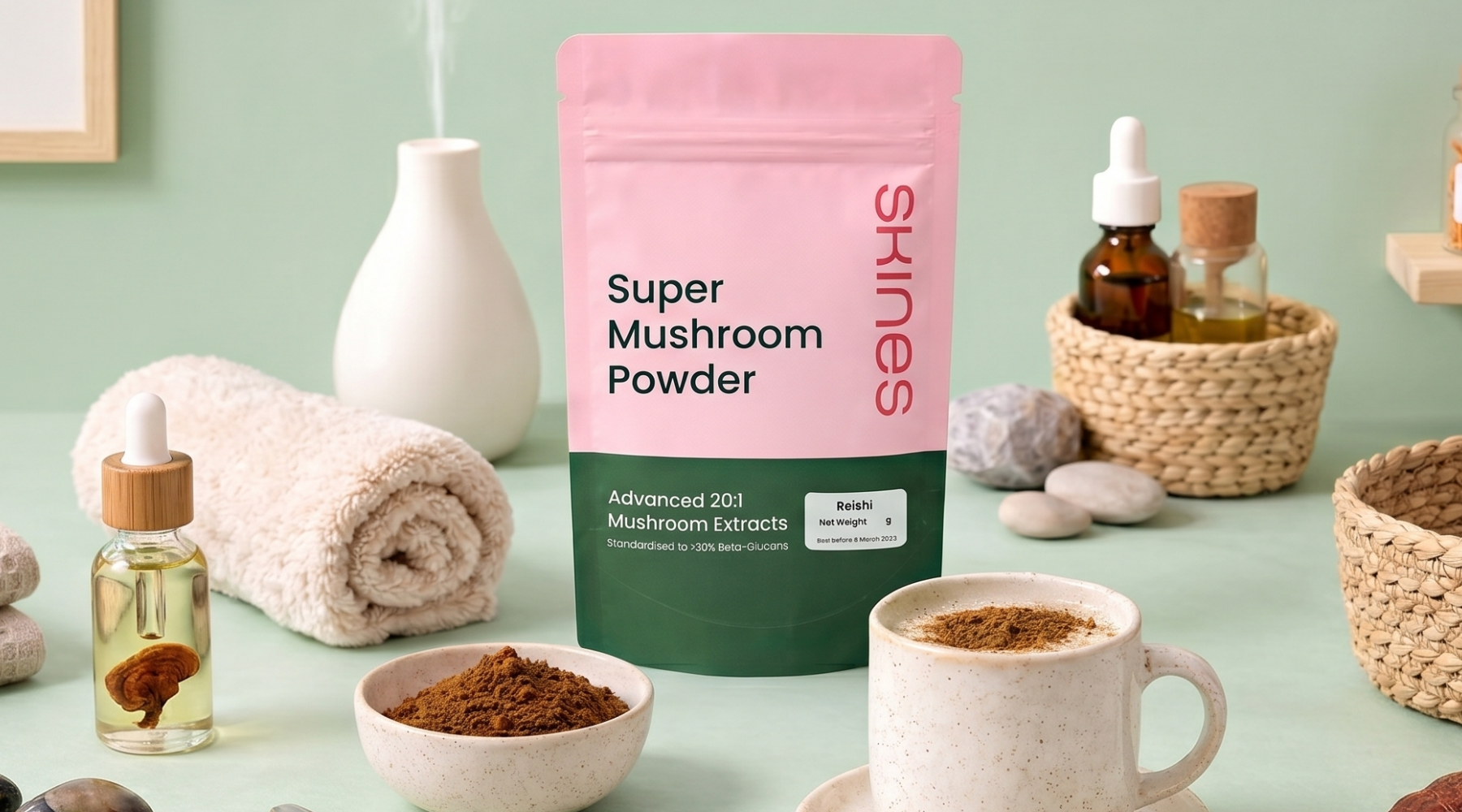
SKINES Super Reishi Powder uses a premium 20:1 fruiting body extract, one of the highest concentration ratios available in Australia, with no fillers, no grain, and no compromise on active compound levels.
2–4
Weeks for most users to notice meaningful stress and sleep improvement
20:1
Extract ratio in SKINES Reishi Powder
400+
Bioactive compounds identified in Reishi mushroom
2000+
Years Reishi has been used in traditional East Asian medicine
In this guide
- What is Reishi mushroom?
- The science: how Reishi affects stress and sleep
- What the research actually shows
- Specific benefits: stress, sleep, immunity, and more
- How long does Reishi take to work?
- Why extract quality changes everything
- Reishi vs Lion's Mane vs Turkey Tail: which do you need?
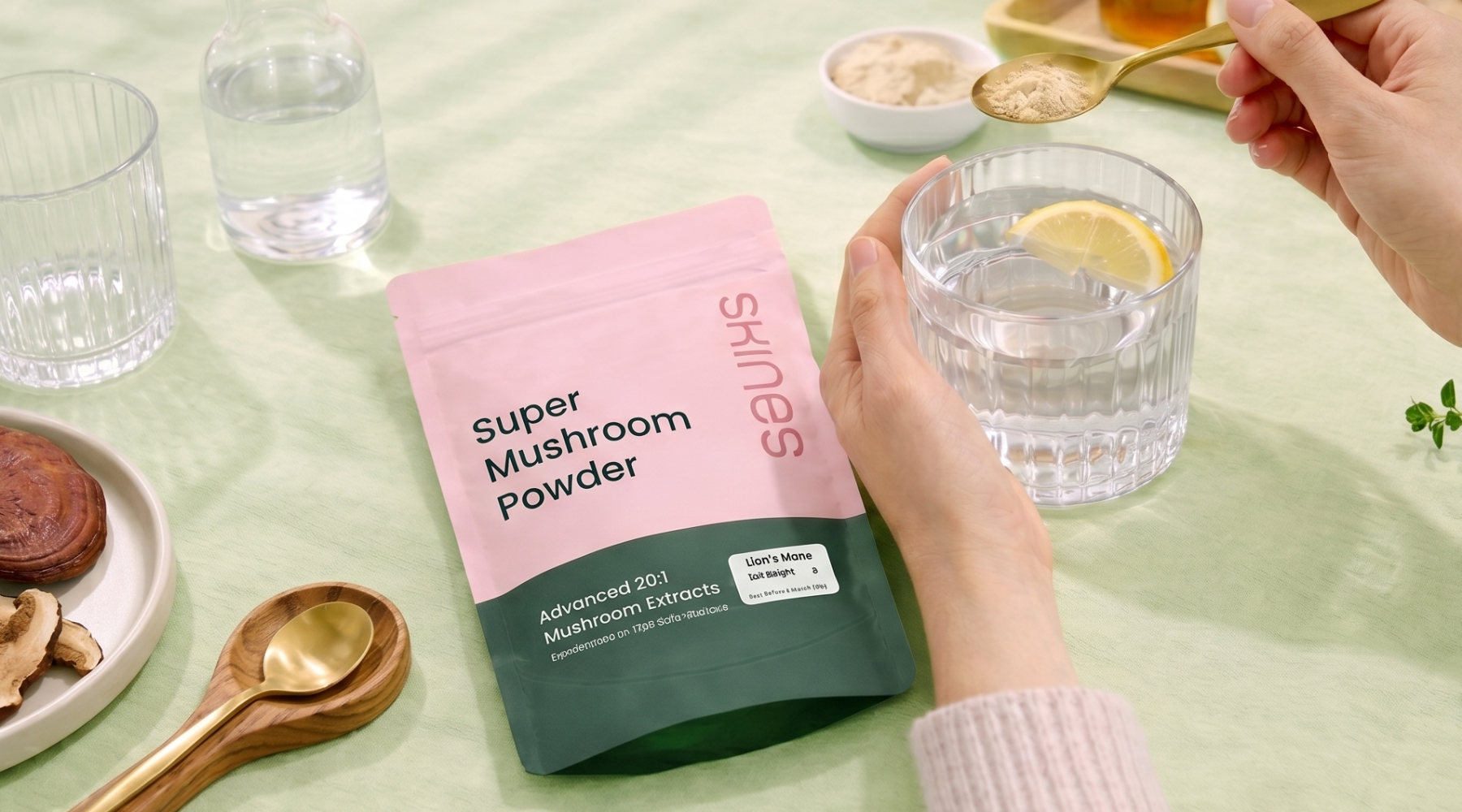
- How to use Reishi powder for best results
- Which mushroom powder is right for you?
- Frequently asked questions
Stress and poor sleep are two of the most commonly searched wellness concerns in Australia right now. And with good reason: the two are deeply connected. Chronic stress disrupts sleep architecture. Poor sleep amplifies the stress response the next day. Left unaddressed, the cycle compounds over weeks and months into something much harder to break.
Reishi mushroom has been studied for its role in interrupting exactly this cycle, not through sedation or stimulation, but through genuine physiological regulation of the stress response. It is also one of the most misrepresented supplements on the market, frequently overhyped in marketing and underexplained in terms of what it actually does and how long it takes.
This guide gives you the honest picture. The mechanism, the research, the realistic timeline, and what to look for in a product that actually works.
What Is Reishi Mushroom?
Reishi (Ganoderma lucidum) is a large, glossy, reddish-brown mushroom native to Asia. In traditional Chinese, Japanese, and Korean medicine, it has been revered for over two thousand years under names including Lingzhi (in China) and Mannentake (in Japan), meaning "ten-thousand-year mushroom." It was historically associated with longevity, vitality, and calm mental clarity, and was so prized that it was often reserved for royalty.
Modern biochemistry has identified over 400 bioactive compounds in Reishi, including polysaccharides (particularly beta-glucans), triterpenoids (ganoderic acids), peptidoglycans, and adenosine. These compounds collectively produce the adaptogenic, immune-modulating, and nervous-system-regulating effects that researchers have been studying for decades.
An adaptogen is a substance that helps the body resist and adapt to physical, chemical, and biological stressors. Unlike a sedative (which forces sleep) or a stimulant (which forces wakefulness), an adaptogen works by normalising dysregulated physiological systems. Reishi does this primarily through the HPA axis, the hypothalamic-pituitary-adrenal axis that governs your body's stress response, including cortisol production and the sympathetic nervous system.
What distinguishes Reishi from most adaptogens is the breadth of its mechanism. It does not just reduce cortisol. It also modulates immune function, supports liver detoxification pathways, promotes deeper sleep architecture, and reduces anxiety-related neurological activity, all through different but complementary compounds within the same mushroom.
The Science: How Reishi Affects Stress and Sleep
To understand why Reishi works differently to other sleep and stress supplements, you need to understand what it is actually doing in your body.
The HPA Axis and Cortisol Regulation
When you experience stress, your hypothalamus signals the pituitary gland, which signals the adrenal glands to release cortisol. In short bursts, cortisol is useful; it sharpens focus and mobilises energy. Chronically elevated cortisol, however, disrupts sleep, impairs immune function, increases inflammation, and damages the brain regions involved in memory and emotional regulation.
Reishi's triterpenoids, particularly the ganoderic acids, have been shown in research to modulate HPA axis activity, reducing the sensitivity of the stress response system and normalising cortisol output. This is not the same as blocking cortisol entirely, which would be harmful. It is a regulatory effect that brings an overactive stress system back toward balance.
Sleep Architecture and Adenosine
Reishi contains adenosine, a nucleoside that plays a direct role in the regulation of sleep pressure, the biological drive to sleep that accumulates throughout the day. Adenosine binds to receptors in the brain that promote drowsiness and inhibit arousal, which is also why caffeine (which blocks adenosine receptors) keeps you awake.
Research suggests that Reishi's sleep-promoting effects are linked both to its adenosine content and to its modulation of the nervous system more broadly. Importantly, the sleep improvement associated with Reishi use tends to affect sleep quality rather than simply sleep onset, specifically the proportion of time spent in deep, non-REM sleep, which is where the body does most of its physical restoration and the brain consolidates memory.
Beta-Glucans and Immune Modulation
Reishi's polysaccharides, primarily beta-glucans, are among the most studied immune-active compounds in natural medicine. They work by activating macrophages, natural killer cells, and T-lymphocytes, enhancing the immune system's ability to respond to threats without triggering chronic inflammation. This is important for stress and sleep because chronic stress suppresses immune function, and a well-regulated immune system is associated with better sleep quality and lower systemic inflammation.
Chronic stress elevates cortisol, which suppresses immunity and disrupts sleep. Poor sleep elevates cortisol and further impairs immunity. Compromised immunity increases systemic inflammation, which disrupts sleep and amplifies stress reactivity. Reishi addresses all three pathways simultaneously, which is why its effects feel broader and more systemic than a targeted sleep supplement or a single-mechanism stress reliever.
What the Research Actually Shows
Reishi has been studied more extensively than almost any other functional mushroom. Here is an honest summary of the human research, distinguishing what is well-supported from what is still emerging.
The honest summary: The human trial evidence for Reishi is strongest for fatigue reduction and immune modulation. Sleep quality improvement has solid mechanistic support and consistent animal research, with human studies aligning. Anxiety reduction is mechanistically plausible but needs more large-scale human trials. For anyone using Reishi for stress and sleep, the realistic expectation is a gradual, cumulative improvement in overall stress resilience and sleep depth, not an overnight transformation.
Specific Benefits: What Reishi Is Actually Supported To Do
How Long Does Reishi Take to Work?
This is where most brands mislead people. Reishi is not melatonin. It does not knock you out on night one. Its benefits are real, but they emerge through a cumulative physiological process, not an acute pharmaceutical effect.
Why Extract Quality Changes Everything
As with Lion's Mane, the gap between an effective Reishi product and an ineffective one is almost entirely a quality question. And as with Lion's Mane, most of the cheap products on the market fail the quality test in exactly the same way.
Fruiting Body vs Mycelium on Grain
Reishi's active compounds, the triterpenoids (ganoderic acids) and polysaccharides (beta-glucans), are concentrated in the fruiting body of the mushroom, not the mycelium. The majority of inexpensive Reishi supplements use mycelium on grain: mycelium grown on rice or oats, dried, and powdered. The result is a product that is largely grain starch with minimal concentrations of the compounds that produce Reishi's benefits.
Ganoderic acids in particular, the triterpenoids responsible for most of Reishi's stress-modulating and liver-supporting effects, are found almost exclusively in the fruiting body and require specific dual-extraction (water and alcohol) to be bioavailable in a powder or capsule form.
Fruiting body extract: not "mycelium," not "whole mushroom," not "mycelium biomass." The fruiting body is where the active compounds are concentrated.
Dual extraction: for Reishi specifically, both water extraction (for polysaccharides/beta-glucans) and alcohol extraction (for triterpenoids/ganoderic acids) are needed for full-spectrum efficacy.
Extract ratio: a 20:1 extract means 20kg of raw mushroom was concentrated into 1kg of extract. This ratio matters enormously for active compound concentrations.
No added grain, oats, or rice: if these appear on the ingredient list, the product is mycelium on grain, not a genuine mushroom extract.
The 20:1 Standard
SKINES Super Reishi Powder uses a premium 20:1 fruiting body extract, meaning 20kg of raw Reishi fruiting body is concentrated into every 1kg of final powder. This is among the highest concentration ratios available in the Australian market, and it ensures that the ganoderic acids and beta-glucans are present at levels that reflect the research dosing used in clinical studies, not the diluted, grain-heavy products that fill the supplement shelf.
Reishi vs Lion's Mane vs Turkey Tail: Which Do You Need?
All three mushrooms in the SKINES mushroom range work through different primary mechanisms and serve different purposes. Here is how to think about which one fits your situation.
Swipe to see all columns
| Mushroom | Primary mechanism | Best for | Time to notice | When to take |
|---|---|---|---|---|
| Reishi | HPA axis regulation, cortisol modulation, adenosine | Stress, sleep quality, calm, immunity, recovery | 2–4 weeks | Evening |
| Lion's Mane | NGF stimulation, neuroplasticity | Focus, memory, brain fog, cognitive longevity | 4–8 weeks | Morning |
| Turkey Tail | Prebiotic, gut microbiome support, immune activation | Gut health, immune resilience, overall vitality | 2–6 weeks | Anytime |
| Signature Blend | All three mechanisms combined | Focus, calm, immunity, and skin radiance simultaneously | 2–6 weeks | Morning |
Can you take Reishi and Lion's Mane together? Yes, and this is one of the most popular combinations among SKINES customers. Lion's Mane in the morning supports cognitive function and focus during the day. Reishi in the evening supports stress recovery and sleep quality overnight. They have complementary mechanisms and no known interactions. The SKINES Signature Blend includes both, plus Turkey Tail, in one convenient daily powder.
How to Use Reishi Powder for Best Results
Which Mushroom Powder Is Right for You?
Use this as your shortcut to find the right SKINES mushroom product for your goals.
Sleep quality and stress recovery
You struggle to wind down, wake often during the night, or feel the physical effects of chronic stress during the day.
Focus, brain fog, and cognitive health
You need sharper focus, better memory, and sustained mental clarity throughout the day.
Gut health and immune resilience
You want to strengthen gut microbiome diversity, immune function, and overall systemic vitality.
All three benefits in one daily powder
You want comprehensive adaptogenic support without managing multiple products, the ideal starting point for beginners.
Stress, skin, and collagen stack
You want to address stress-driven skin ageing from within, combining Reishi's cortisol regulation with SKINES' collagen system.
Subscribe and never miss a dose
Consistency is the entire mechanism with adaptogens. Subscribe and Save removes the friction of reordering and saves up to 25% on every delivery.
The Honest Verdict
Does Reishi mushroom actually help with sleep and stress? Yes, but the mechanism matters.
Reishi is not a quick fix. It does not sedate you, it does not spike any neurotransmitter artificially, and it will not produce a dramatic effect on night one. What it does, with consistent daily use over two to four weeks, is genuinely regulate the physiological systems that drive chronic stress and poor sleep quality. Cortisol modulation through the HPA axis, adenosine-mediated sleep architecture improvement, and immune system normalisation are all real, researched mechanisms.
The key is quality and consistency. The majority of Reishi products on the market use mycelium on grain and deliver minimal active compounds. Only fruiting body extracts at meaningful concentration ratios, like the 20:1 standard used by SKINES, deliver what the research actually shows works.
Take it every evening. Give it four to eight weeks. Track your sleep and stress markers before you start. The change will come, and it will be worth the patience.
Shop SKINES Super Reishi PowderFrequently Asked Questions
Does Reishi mushroom actually help with sleep?
Does Reishi reduce cortisol?
When should I take Reishi powder: morning or evening?
How long does Reishi take to work for sleep and stress?
Can I take Reishi every day?
Is Reishi safe? Are there any side effects?
Can I take Reishi with Lion's Mane?
What is the difference between Reishi fruiting body and mycelium on grain?
Can I take Reishi with collagen supplements?
Where can I buy Reishi mushroom powder in Australia?

Written by Matthew Youn




Leave a comment
This site is protected by hCaptcha and the hCaptcha Privacy Policy and Terms of Service apply.