Skip to content

Cart

Your cart is empty

Article: Collagen Film for Skin: Everything You Need to Know Before You Try It

Collagen Film for Skin: Everything You Need to Know Before You Try It | SKINES
Blog

Collagen Film for Skin: Everything You Need to Know Before You Try It

Quick Answer: What Is a Collagen Film and Does It Work?

A collagen film is a thin, self-dissolving sheet of concentrated collagen that melts directly into your skin. Unlike a cream that sits on the surface or a sheet mask soaked in serum, a quality collagen film delivers pure collagen in a format designed to stay in sustained contact with the skin as it dissolves, maximising absorption.

Whether it works comes down to one thing: molecule size. Standard collagen is far too large to cross the skin barrier. Only films that reduce collagen below the skin penetration threshold (around 500 daltons) can actually reach the dermis where it matters.

The SKINES Super Collagen Melting Film uses patented NanoFibre Technology to reduce pure marine collagen to under 300 daltons, making it one of the few collagen films on the Australian market engineered for genuine transdermal delivery rather than surface hydration.

<300

Daltons: SKINES NanoFibre collagen molecule size

99.86%

Pure marine collagen, just three ingredients

15–20

Minutes for the film to fully dissolve into skin

30

Layered collagen threads per film for even delivery

In this guide

Collagen films are one of the newest and most talked-about formats in skincare, and if you have seen them appearing across K-beauty routines and social feeds, you have probably wondered whether they are a genuine innovation or just clever packaging.

The honest answer is that it depends entirely on the film. Some are a real step forward in how collagen is delivered to skin. Others are the same ineffective collagen in a novel wrapper. This guide explains exactly what a collagen film is, how it works, what separates an effective one from a gimmick, and everything you should know before you try one.

What Is a Collagen Film?

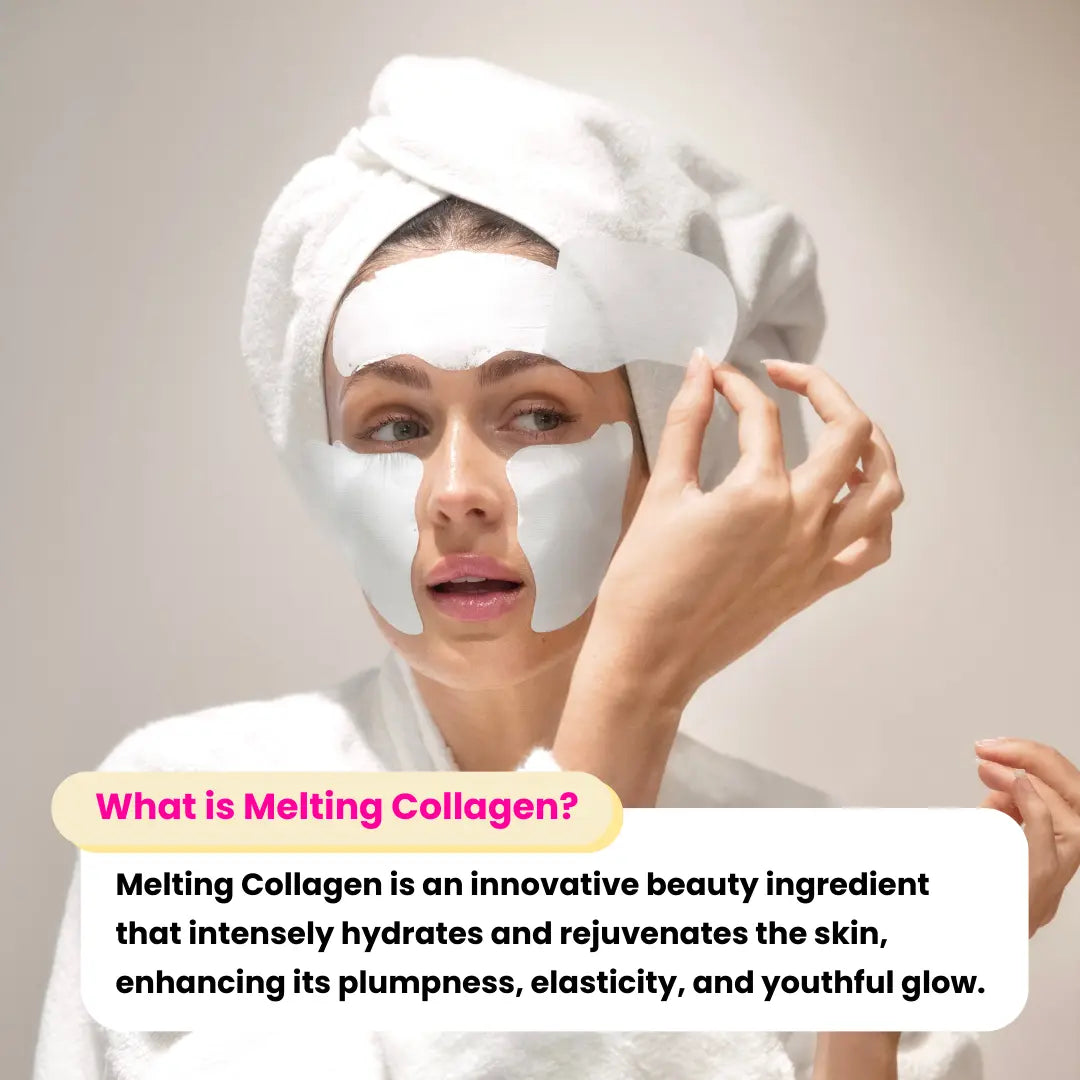
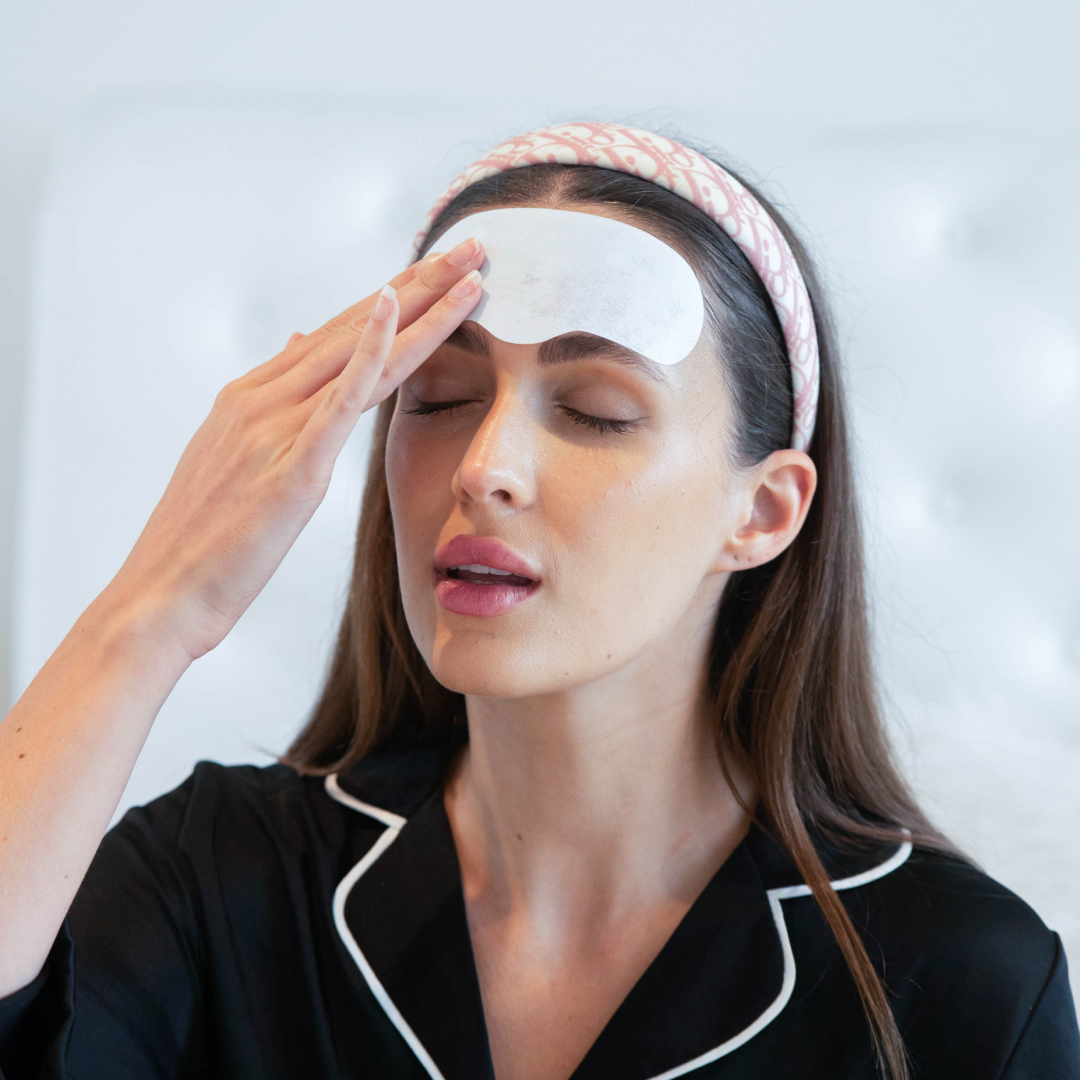
A collagen film is a thin, dry, dissolvable sheet made from concentrated collagen. You apply it to clean, slightly damp skin, and over the following minutes it melts and absorbs, delivering its collagen payload as it dissolves. It is sometimes called a collagen melting film, a dissolving collagen film, or a collagen film mask.

The format matters more than it might seem. Most collagen products face the same fundamental challenge: getting collagen to stay in contact with the skin long enough, and in a concentrated enough form, to be absorbed. A cream is rubbed in and largely wiped away within seconds. A serum evaporates or is absorbed by whatever is layered on top. A collagen film is designed to sit on the skin and dissolve slowly, keeping pure collagen in direct, sustained contact with the surface for the entire dissolution window.

The core idea behind a collagen film

Instead of diluting collagen into a cream or serum base, a collagen film delivers it in near-pure, concentrated form. The film format solves the contact-time problem: rather than a few seconds of application, the collagen stays on your skin and dissolves gradually, giving it the maximum possible window to be absorbed.

The best collagen films contain very few ingredients. The SKINES Super Collagen Melting Film, for example, is 99.86% pure marine collagen with just three ingredients total: collagen, hydrolysed collagen, and sodium hyaluronate. No fillers, no thickeners, no water diluting the active.

How a Collagen Film Actually Works

The mechanism is elegant, but it only works if the underlying science is right. A quality film releases collagen gradually as it dissolves, and if the molecules are small enough, they travel down through the skin layers to where collagen actually matters. Here is that journey, layer by layer.

The journey a collagen film takes through skin
Most stop here
Step 1 · Surface contact
Stratum corneum
The film meets clean, damp skin and begins dissolving. Standard large-molecule collagen goes no further than this outer barrier, which is why most collagen products only hydrate the surface.
Large molecules blocked
Step 2 · Gradual release
Epidermis
Over 15 to 20 minutes the layered threads dissolve progressively, releasing collagen steadily. Only molecules below roughly 500 daltons can pass through the living epidermal cells beneath.
NanoFibre reaches
Step 3 · True delivery
Dermis
Under-300-dalton NanoFibre collagen reaches the dermis, where fibroblasts live and the structural matrix is maintained. This is the only layer where collagen contributes to genuine firmness rather than temporary surface softness.

The takeaway is simple: the film format keeps collagen in contact with skin long enough to be absorbed, but only small enough molecules complete the journey to the dermis. That single distinction is what separates an effective film from a pleasant but pointless one.

Collagen Film vs Cream vs Sheet Mask

Collagen comes in many formats, and they are not equivalent. Comparing the film to the two most common alternatives, the cream and the sheet mask, explains why the format exists at all.

Collagen cream
ConcentrationLow, diluted in a base
Contact timeSeconds, then rubbed in
Reaches dermisNo, molecules too large
Best forSurface hydration only
Collagen sheet mask
ConcentrationLow to moderate, in serum
Contact time15 to 20 minutes
Reaches dermisRarely, standard collagen
Best forTemporary plumping, hydration
SKINES Collagen Film ✦
Concentration99.86% pure collagen
Contact time15 to 20 minutes dissolving
Reaches dermisYes, under 300 daltons
Best forGenuine transdermal delivery

The key difference is concentration plus penetration. A sheet mask keeps collagen on the skin for a similar length of time, but the collagen is diluted in serum and, crucially, is usually standard large-molecule collagen that cannot penetrate. A film delivers near-pure collagen and, if engineered correctly, in a molecule size small enough to actually cross the barrier. That combination is what makes the format worthwhile.

Does a Collagen Film Really Penetrate Skin?

This is the question that separates marketing from science, and it deserves an honest answer: a collagen film only penetrates skin if its molecules are small enough. The film format alone does not guarantee anything.

Your skin's outer layer, the stratum corneum, is a highly selective barrier. Decades of dermatological research point to a threshold of roughly 500 daltons: molecules larger than this generally cannot cross into the viable skin layers beneath. This is the single most important fact to understand about any topical collagen product.

Where collagen films fall on the scale

Native collagen: approximately 300,000 daltons, far too large to penetrate.

Standard hydrolysed collagen (most films and masks): 3,000 to 10,000 daltons, still well above the threshold.

Skin penetration threshold: approximately 500 daltons.

SKINES NanoFibre collagen: under 300 daltons, genuinely below the threshold.

This is why not all collagen films are equal. A film made from standard collagen will dissolve nicely, feel lovely, and hydrate the surface, but the collagen itself will not reach the dermis. Only a film that has reduced its collagen below the penetration threshold delivers on the promise of the format. NanoFibre Technology is the process SKINES uses to achieve this, reducing pure marine collagen to under 300 daltons.

The honest test: If a collagen film does not state its molecule size or does not describe a specific technology for reducing molecular weight, assume it is standard large-molecule collagen and will not penetrate. Genuine penetration is a claim that requires a genuine mechanism.

What to Check Before You Buy Any Collagen Film

Use this checklist to separate an effective collagen film from an expensive novelty. A quality film should tick all four boxes.

Molecule size below 500 daltons
This is non-negotiable. Without it, the collagen cannot penetrate the skin barrier no matter how nicely the film dissolves. Look for a stated molecule size or a named technology for reducing molecular weight. SKINES states under 300 daltons via NanoFibre Technology.
Type I marine collagen
Type I collagen makes up around 90% of your skin's collagen, and marine collagen is almost entirely Type I. It is the structurally correct match for skin, and its naturally smaller molecular size gives it an absorption advantage over bovine collagen.
High purity, minimal ingredients
The best films are almost entirely collagen, not collagen diluted with fillers and thickeners. SKINES is 99.86% pure with just three ingredients: collagen, hydrolysed collagen, and sodium hyaluronate. Fewer ingredients means more active per application.
Clean, safe formulation
Look for paraben-free, sulfate-free, and hypoallergenic. A quality film should be suitable for sensitive skin and, ideally, safe for use during pregnancy and breastfeeding, which the SKINES film is.

The SKINES Super Collagen Melting Film

Here is how the SKINES film measures against everything covered above, and why it was formulated the way it is.

Topical collagen, direct dermal delivery
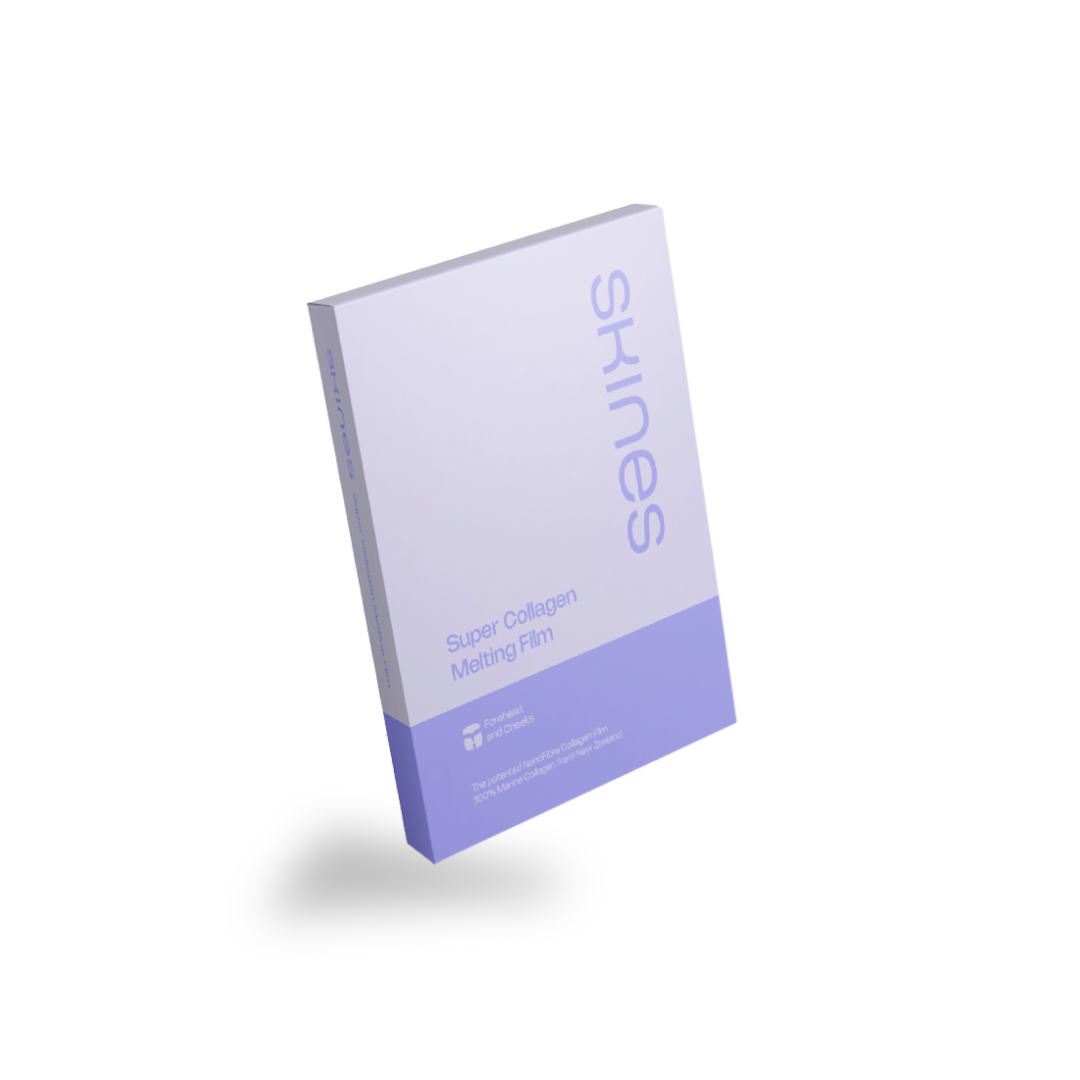
Super Collagen Melting Film
Forehead/Neck + Cheek, 5 pouches per box
NanoFibre Technology 1000+ Happy Customers

Collagen type 99.86% Marine Type I|Molecule size <300 daltons|Source NZ deep-sea fish|Structure 30 layered threads|Price AUD $59.99

The SKINES Super Collagen Melting Film is engineered specifically to solve the penetration problem that makes most collagen products ineffective. It combines near-total purity with a molecule size genuinely small enough to cross the skin barrier, delivered in a self-dissolving format that maximises contact time.

  • NanoFibre Technology: reduces marine collagen to under 300 daltons, below the skin penetration threshold, for genuine delivery to the dermis.
  • 99.86% purity: three ingredients only, collagen, hydrolysed collagen, and sodium hyaluronate. No fillers or thickeners diluting the active.
  • New Zealand deep-sea source: Type I marine collagen from pristine South Sea waters, chosen for purity and a clean molecular profile.
  • 30-thread layered structure: even, concentrated collagen distribution across the whole treatment area with gradual dissolution.
  • Pregnancy-safe: hypoallergenic, paraben-free, and sulfate-free, suitable for all skin types including sensitive skin, pregnancy, and breastfeeding.
Ingredients: 78.16% Collagen · 21.7% Hydrolyzed Collagen · 0.14% Sodium Hyaluronate

How to Use a Collagen Film, Step by Step

Getting the most from a collagen film comes down to technique. The film performs dramatically better when the skin is prepped correctly and the film is given time to work.

1
Cleanse and leave skin slightly damp
Start with a clean face. Do not dry your skin completely. A little moisture on the surface is what triggers the film to begin dissolving and helps it adhere and absorb evenly.
2
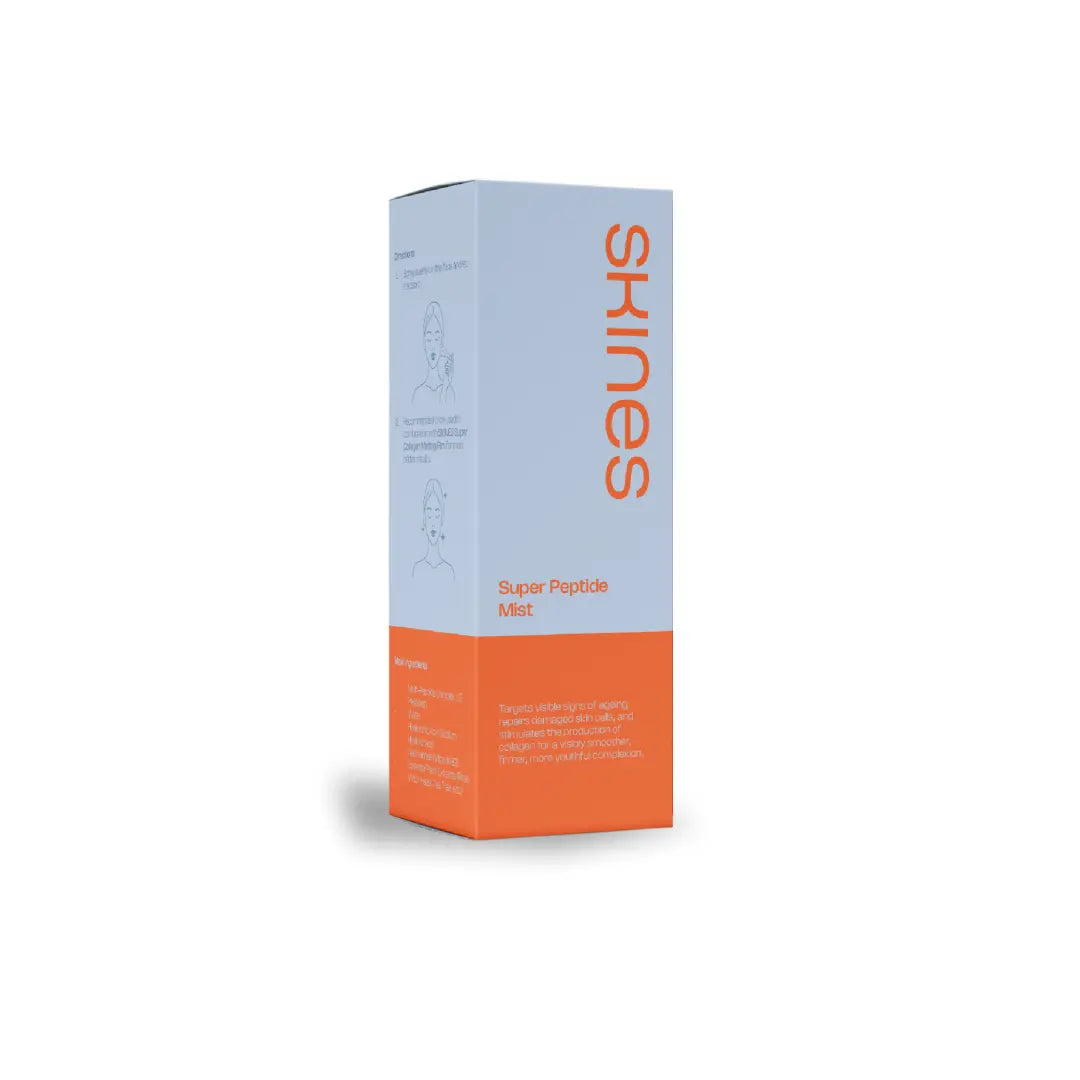
Prep with a peptide mist for best results
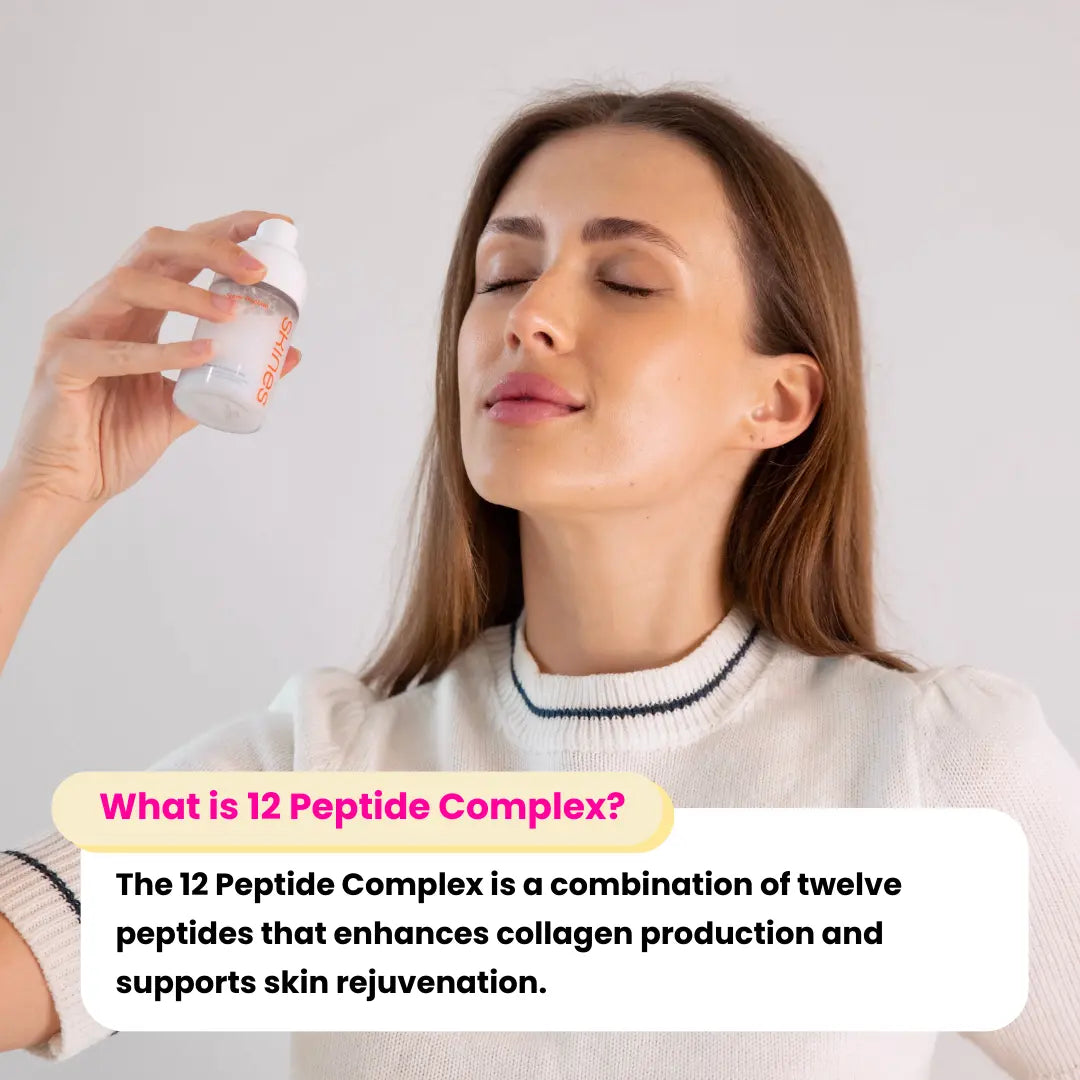
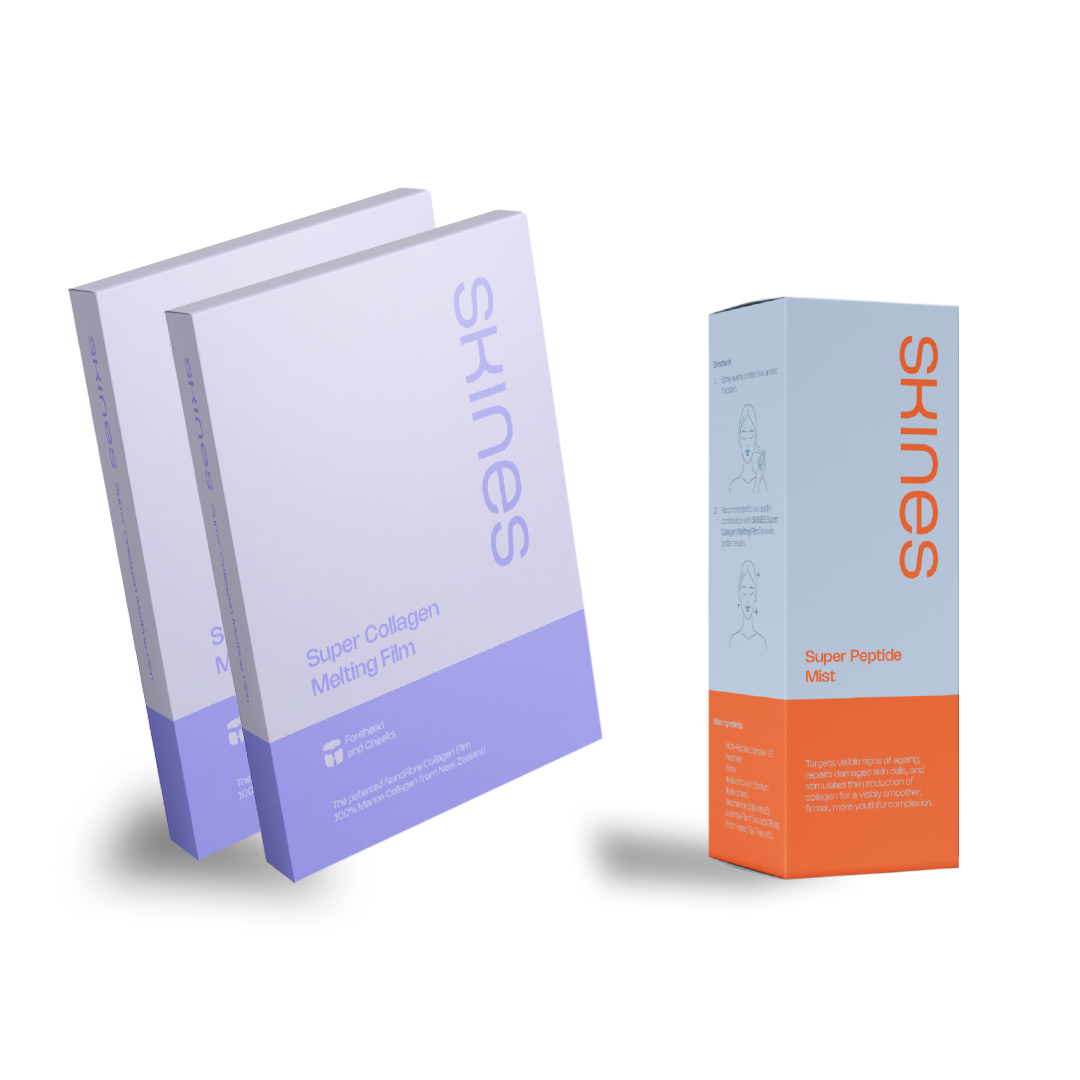
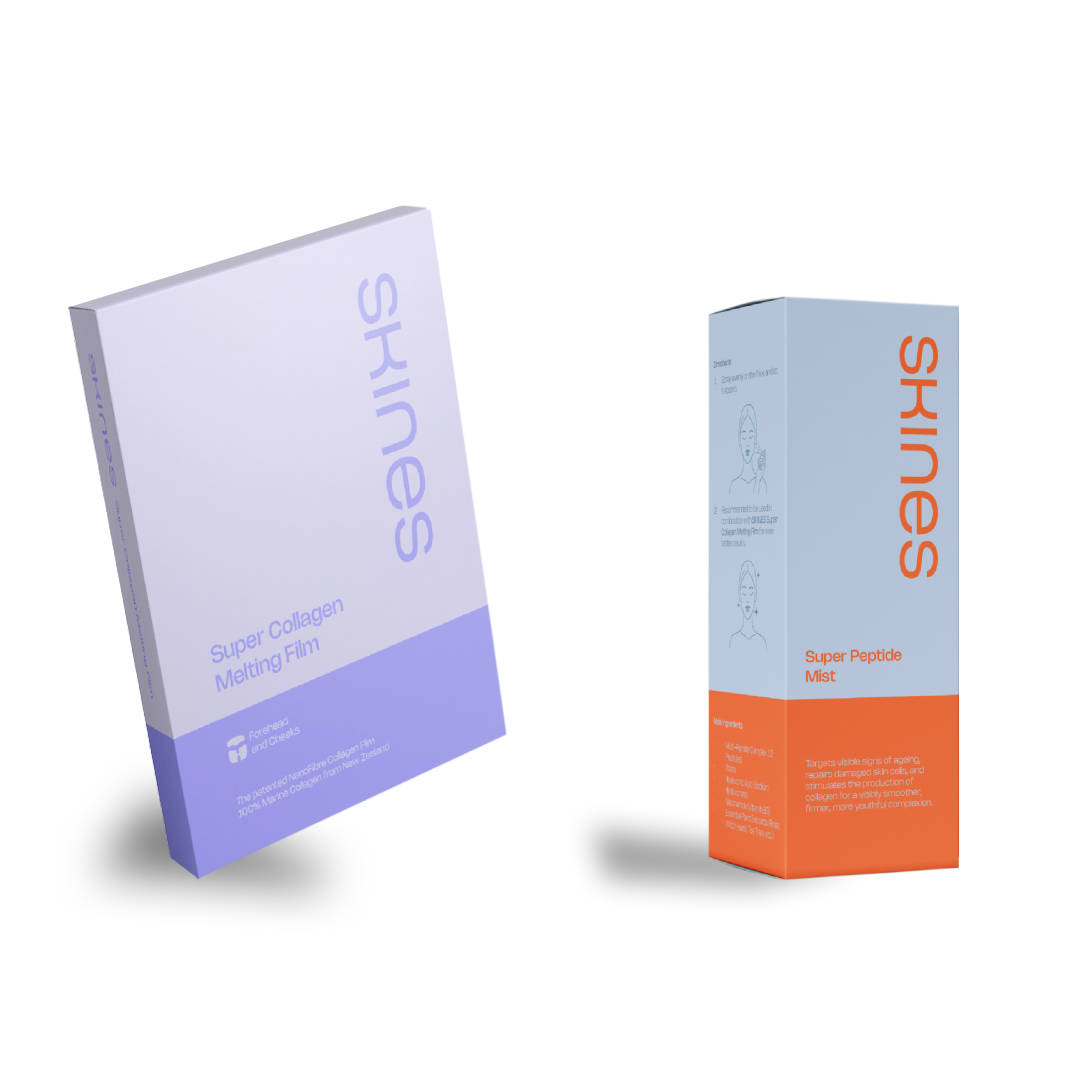
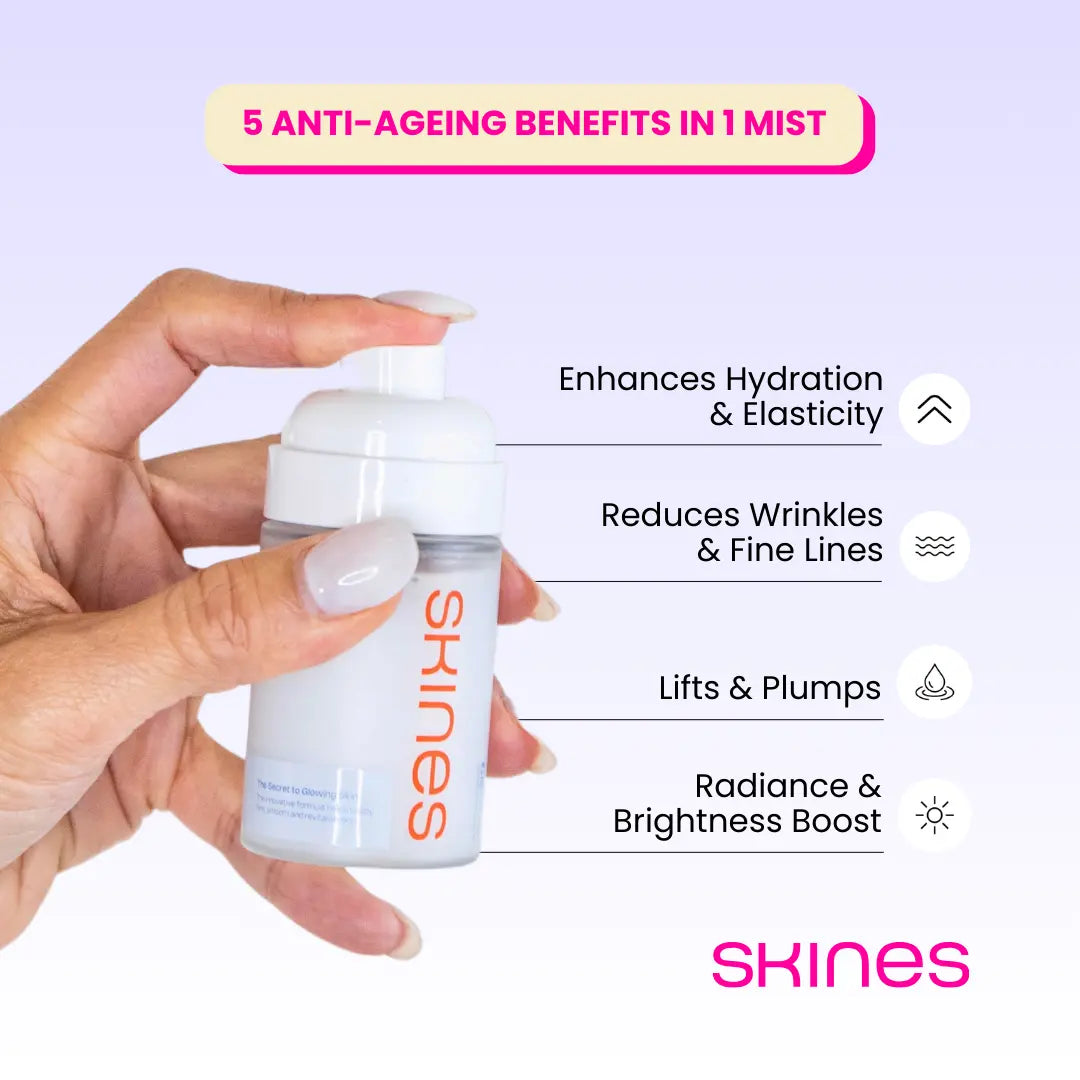
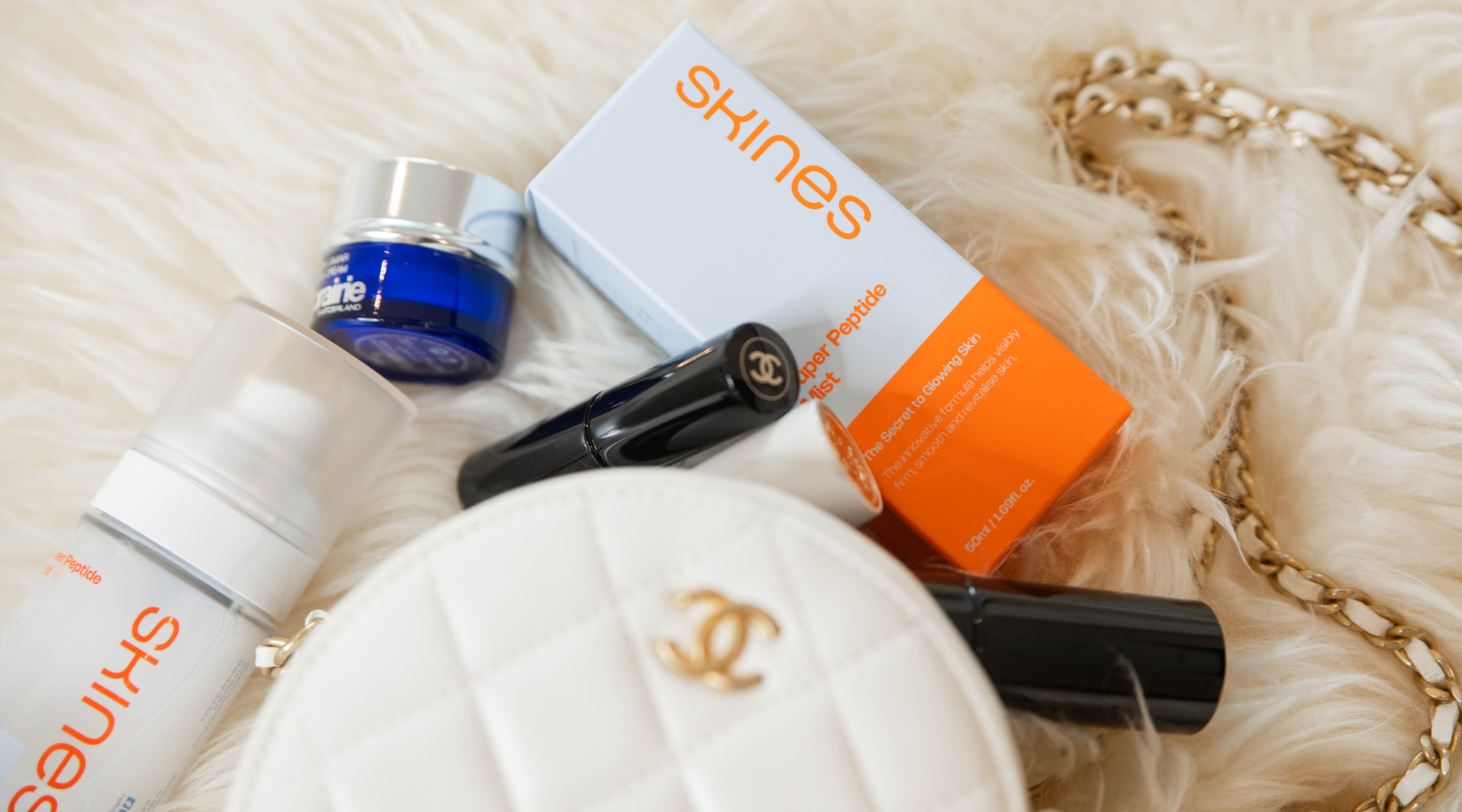
Mist your skin with the SKINES Super Peptide Mist before applying the film. This creates the ideal moisture environment for dissolution and begins activating your skin's own collagen production, so the film and your skin work together.
3
Apply the film to the target area
Place the film on your forehead, neck, or cheeks. Different pouches are shaped for different areas. Smooth it gently so it makes full contact with the skin, with no trapped air pockets.
4
Leave it for 15 to 20 minutes
Let the film dissolve fully. This is not a step to rush. The collagen is released gradually throughout this window, so the longer contact time directly improves how much is delivered. Relax and let it work.
5
Mist again over the film to boost absorption
While the film is dissolving, a light additional mist of the Peptide Mist over the top accelerates dissolution and layers peptide activation over the collagen delivery. This combination is how you get the most from the format.
6
Use consistently, two to three times per week
Collagen results are cumulative. Regular use is what produces visible change over weeks. A Subscribe and Save plan keeps you stocked and saves up to 25% on every order.

What Results to Expect and When

Honest expectations matter. A collagen film is not a filler or an injectable, and it will not transform your skin overnight. What it does deliver, with consistent use, is genuine and progressive.

Immediately
Hydration and a smoother surface
Right after use, skin typically feels plumper, more hydrated, and smoother to the touch. This is partly the surface effect and partly the sodium hyaluronate, and it is real, if temporary on its own.
1 to 2 weeks
Improved luminosity
With regular use, skin often looks more radiant and even. Hydration levels improve and the complexion takes on a healthier glow as the routine establishes itself.
4 to 6 weeks
Firmness and fine lines
This is when the structural benefits begin to show. Skin feels firmer, and fine lines can appear softened as delivered collagen and stimulated production start to make a measurable difference.
8 to 12 weeks
Peak visible results
The deeper, cumulative benefits, improved elasticity and a more resilient, firmer complexion, become most apparent over this period. This is why consistency over three months matters far more than any single application.

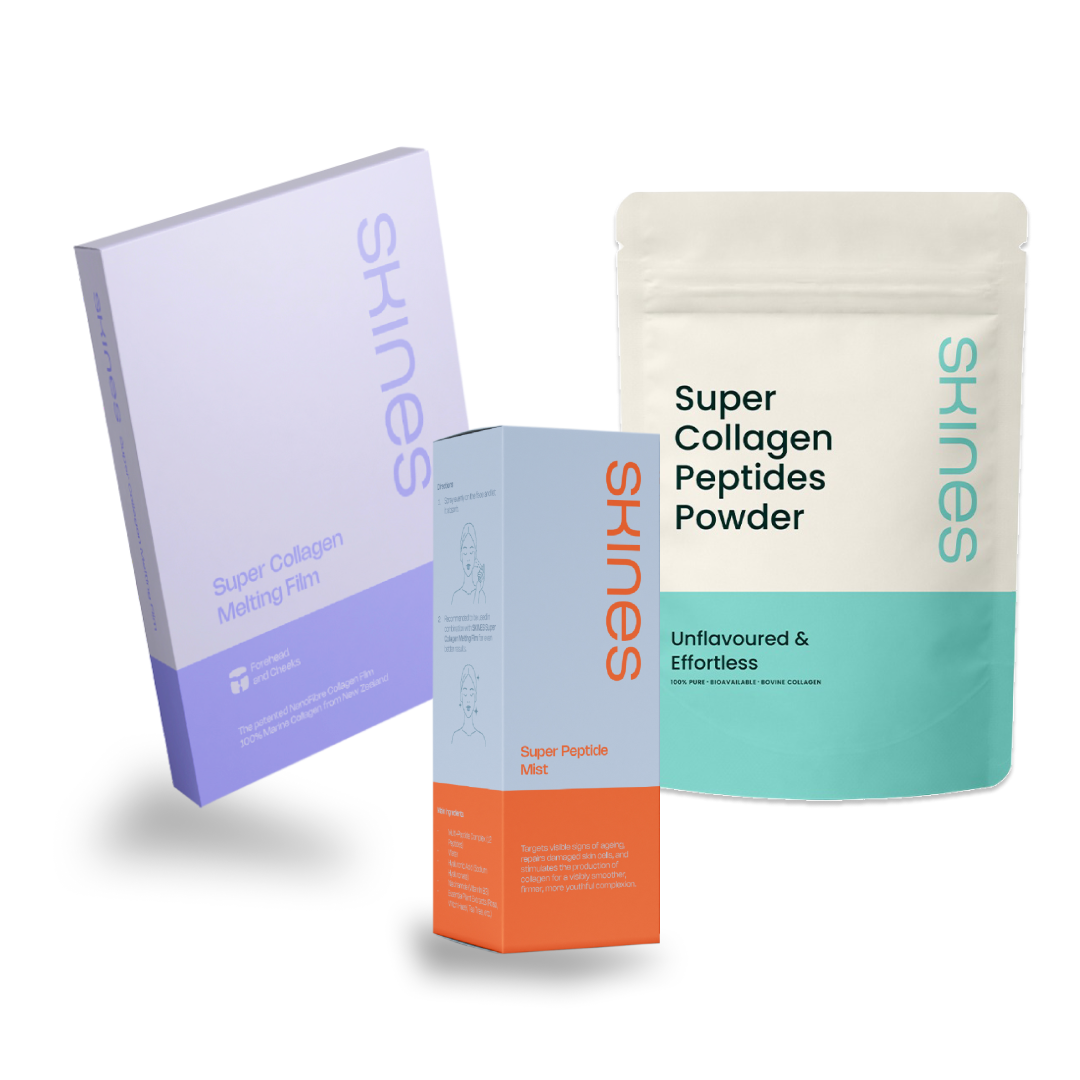
For the strongest results, combine the film with the full system. The film delivers collagen topically, the Peptide Mist activates your skin's own production, and the Collagen Powder supports levels from within. Together they address collagen from three directions at once.

Is a Collagen Film Right for You?

Read down the list and follow the row that fits your goal. Each links to the relevant SKINES product.

You want collagen that actually reaches the dermis, not a cream that sits on top Collagen Melting Film
You want to boost the film and activate your own collagen production Super Peptide Mist
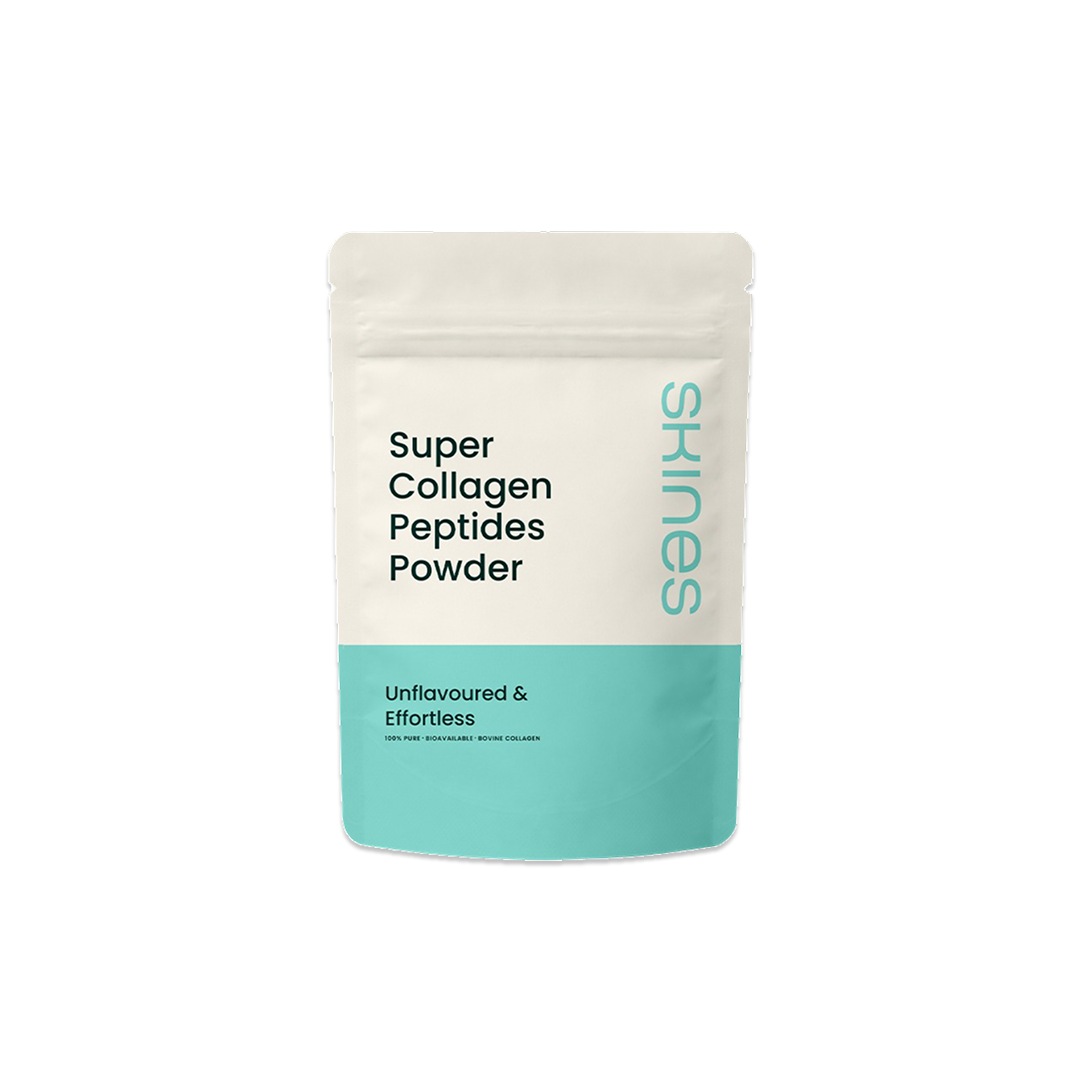
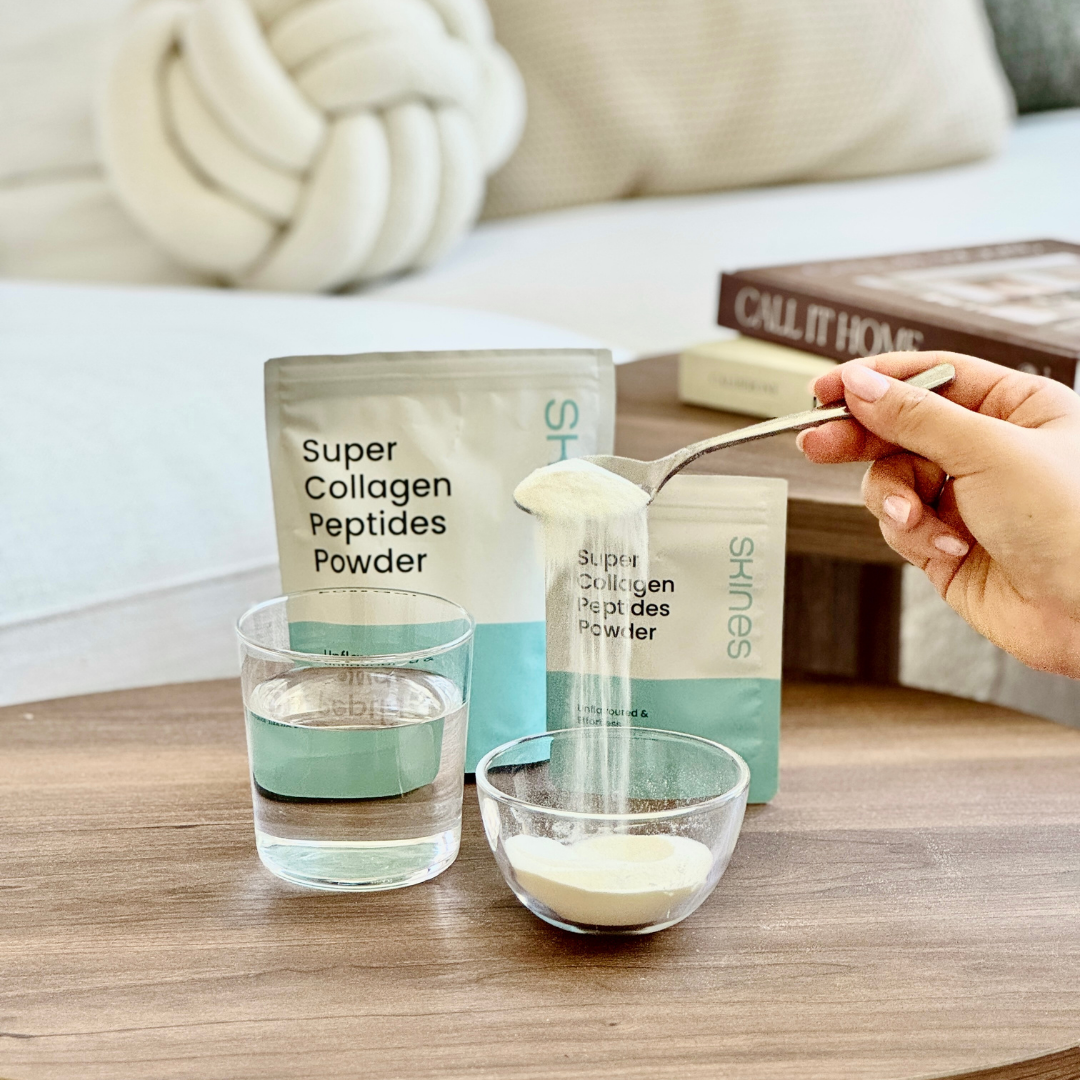
You want collagen from within, for skin, hair, nails and joints Collagen Peptides Powder
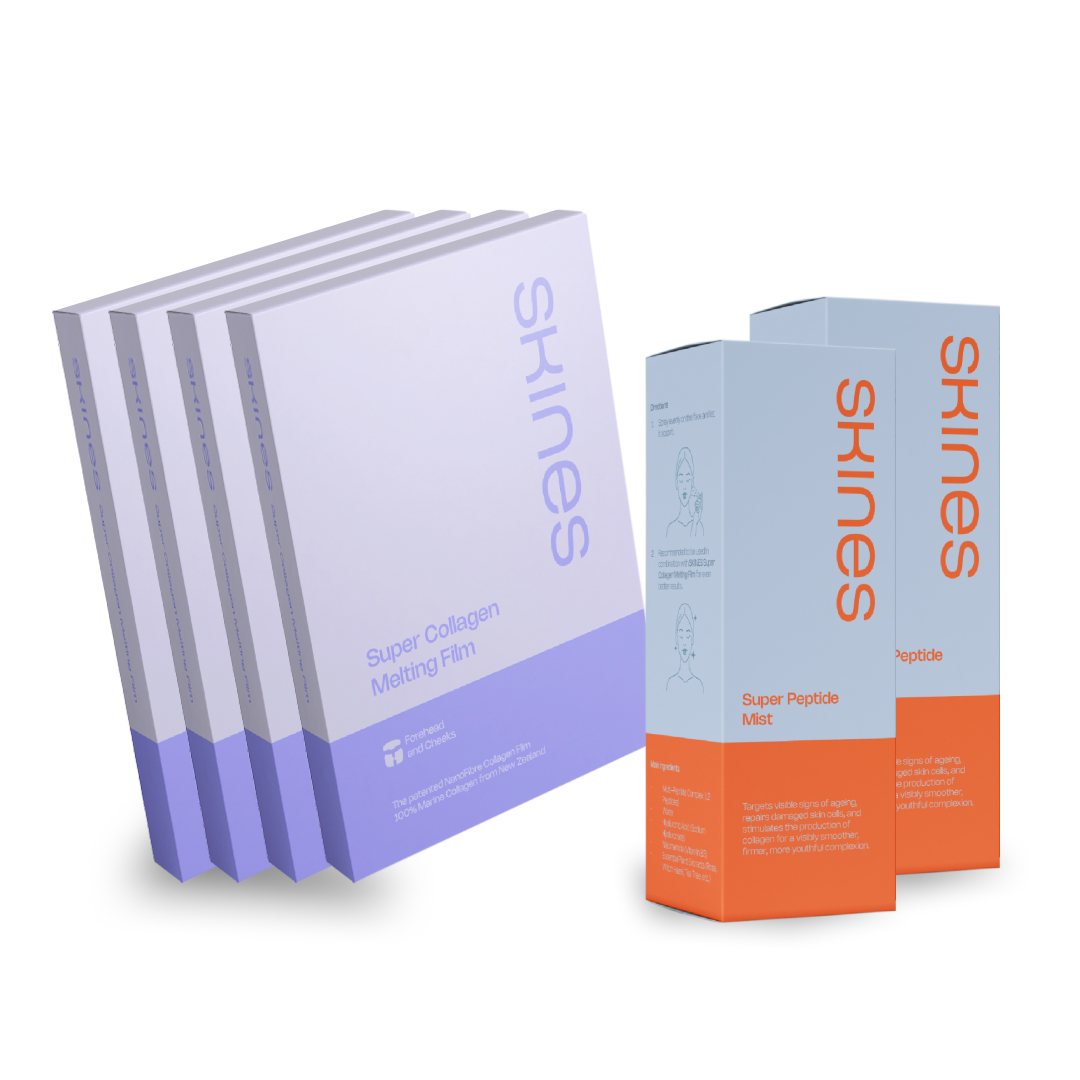
You want the complete system at the best value Collagen Bundles, save 25%
You have sensitive skin or are pregnant and need a clean formula Collagen Melting Film
You want consistency without thinking about reordering Subscribe and Save

The Bottom Line

A collagen film is a genuinely smart format, but only when it is done properly. The self-dissolving design solves the contact-time problem that limits creams, and the near-pure concentration means far more active per application than a diluted serum or mask.

The single thing that determines whether a collagen film works is molecule size. If the collagen is not reduced below the roughly 500-dalton penetration threshold, it cannot reach the dermis, and the format advantage is wasted. This is why so many collagen films feel lovely but deliver little.

The SKINES Super Collagen Melting Film was built specifically to clear that bar: under 300 daltons via NanoFibre Technology, 99.86% pure Type I marine collagen, in a format engineered for genuine transdermal delivery. If you are going to try a collagen film, this is what a properly made one looks like.

Shop the SKINES Collagen Film

Frequently Asked Questions

What is a collagen film?
A collagen film is a thin, dry, dissolvable sheet made from concentrated collagen. Applied to clean, slightly damp skin, it melts and absorbs over 15 to 20 minutes, delivering pure collagen as it dissolves. Unlike a cream that is rubbed in and wiped away, or a serum that evaporates, a film keeps concentrated collagen in sustained contact with the skin for the full dissolution window. The SKINES Super Collagen Melting Film is 99.86% pure marine collagen with just three ingredients.
Do collagen films actually work?
It depends entirely on the film. The format is effective only if the collagen molecules are small enough to cross the skin barrier, which is around 500 daltons. Standard collagen (3,000 to 300,000 daltons) is far too large and will not penetrate, no matter how nicely the film dissolves. Films that reduce collagen below the threshold, like the SKINES film at under 300 daltons via NanoFibre Technology, can genuinely deliver collagen to the dermis. Always check the stated molecule size before buying.
How is a collagen film different from a sheet mask?
A sheet mask is a fabric or hydrogel sheet soaked in serum, which delivers a diluted mix of ingredients and is usually made with standard large-molecule collagen that cannot penetrate. A collagen film is a dry sheet of near-pure collagen that dissolves directly into the skin. The film delivers far higher collagen concentration, and if engineered correctly with small enough molecules, it can actually cross the skin barrier, which most sheet masks cannot.
How do you use a collagen film?
Cleanse and leave skin slightly damp, then mist with the SKINES Peptide Mist to create the ideal moisture environment. Apply the film to your forehead, neck, or cheeks, smoothing it into full contact. Leave it for 15 to 20 minutes to dissolve fully, misting again over the top to boost absorption. Use two to three times per week for cumulative results. Do not rush the dissolving time, as the collagen is released gradually throughout.
How often should I use a collagen film?
Two to three times per week is a good rhythm for most people, and it can be used more often if desired since it is gentle and non-irritating. Collagen results are cumulative, so consistency matters far more than frequency in any single week. A Subscribe and Save plan makes it easy to stay consistent and saves up to 25%.
How long does it take to see results from a collagen film?
Immediately after use, skin looks and feels more hydrated, plumper, and smoother. Improved luminosity typically appears within 1 to 2 weeks of regular use. Firmness and softened fine lines emerge around 4 to 6 weeks, and the deeper structural benefits like improved elasticity are most apparent at 8 to 12 weeks. Results build progressively, so consistency over three months delivers the most noticeable change.
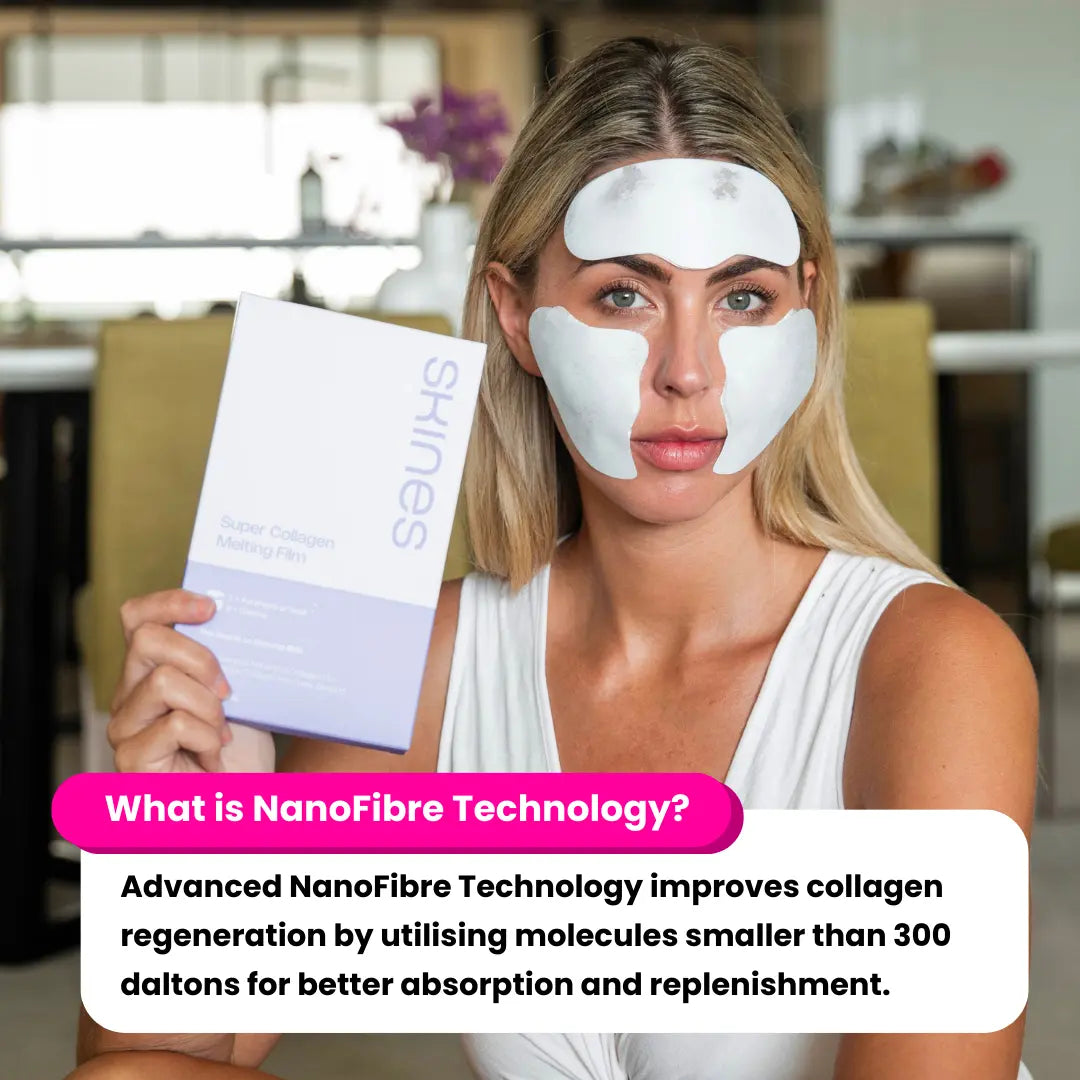
What is NanoFibre Technology?
NanoFibre Technology is the patented process used in the SKINES Super Collagen Melting Film that reduces pure marine collagen to molecules smaller than 300 daltons, below the 500-dalton skin penetration threshold. The NanoFibre collagen is woven into a 30-thread layered film that dissolves into skin over 15 to 20 minutes, delivering collagen continuously and in a molecule size genuinely small enough to reach the dermis.
Is a collagen film safe for sensitive skin and during pregnancy?
The SKINES Super Collagen Melting Film is formulated to be. It contains only three ingredients (collagen, hydrolysed collagen, and sodium hyaluronate), is free from parabens and sulfates, and is hypoallergenic, making it suitable for sensitive and reactive skin. It is also safe for use during pregnancy and while breastfeeding. As with any new skincare product, a patch test is recommended before first use.
Can I use a collagen film with my other skincare?
Yes. The best pairing is with the SKINES Peptide Mist, used before and over the film to prep skin and activate collagen production. After the film has dissolved, you can continue with your usual serums and moisturiser. Avoid applying strong actives like high-strength acids or retinol at the exact same time as the film, to keep the skin surface calm during dissolution.
Where can I buy a collagen film in Australia?
The SKINES Super Collagen Melting Film is available at skines.online, with free shipping on Australian orders over $99. It is available individually or as part of the SKINES collagen bundles alongside the Peptide Mist and Collagen Powder, which save up to 25%. A Subscribe and Save subscription saves a further 25% on every delivery.


Leave a comment

This site is protected by hCaptcha and the hCaptcha Privacy Policy and Terms of Service apply.

All comments are moderated before being published.

.article__hero-image img, .article-hero img { object-fit: contain !important; object-position: center !important; }

Read more

Why Your Collagen Cream Isn't Working? (And What to Use Instead) | SKINES
Blog

Why Your Collagen Cream Isn't Working? (And What to Use Instead)

Quick Answer: Why Is My Collagen Cream Not Working? Because the molecules are too large to penetrate your skin. Dermatology research establishes that molecules above approximately 500 dalto...

Read more