
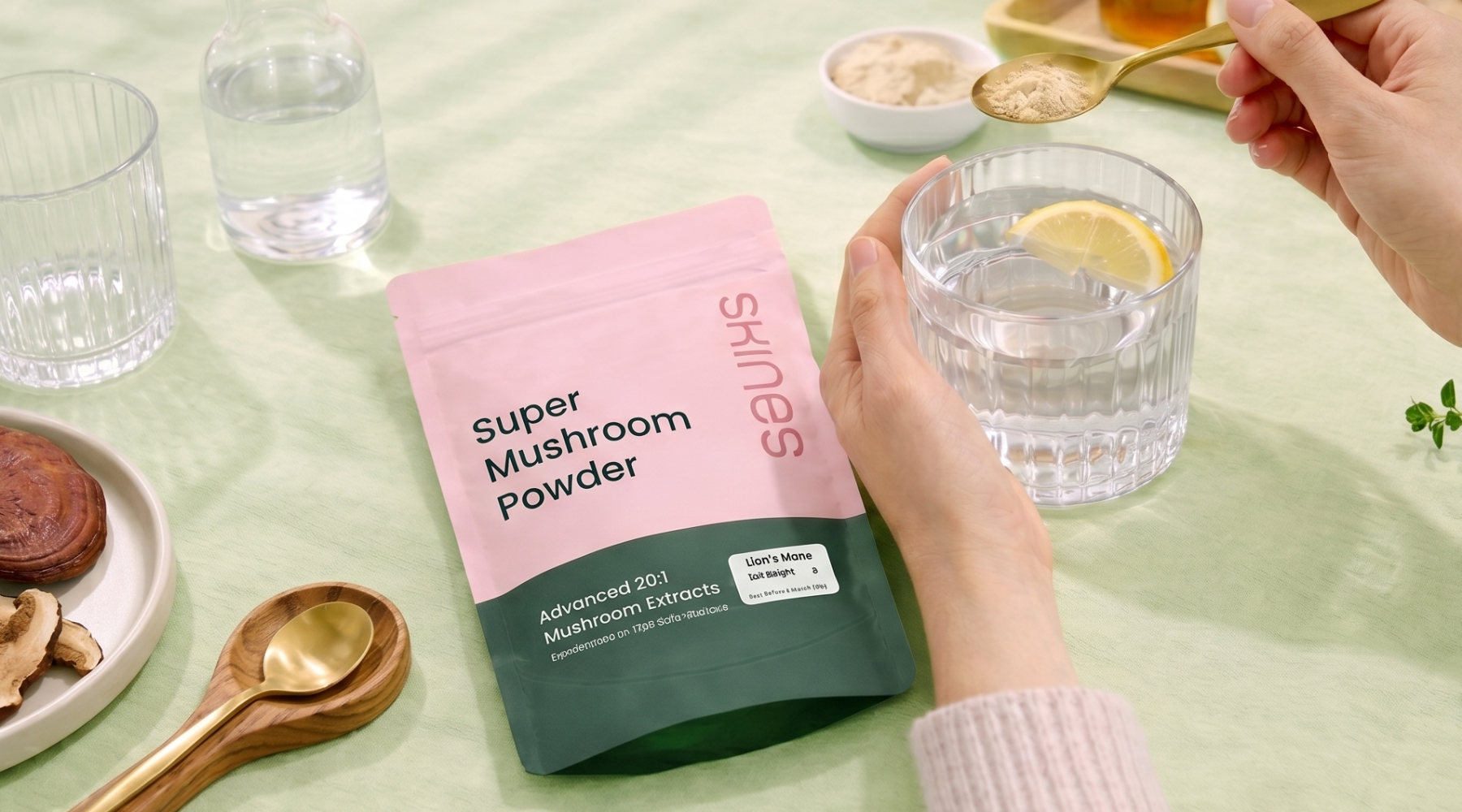
Lion's Mane Mushroom for Focus and Brain Health: Does It Actually Work?
Yes, but not like caffeine. Lion's Mane works through a cumulative, structural mechanism. It stimulates Nerve Growth Factor (NGF), a protein your brain needs to grow, maintain, and repair neurons. Results build over weeks of daily use, not hours.
The research is real. Peer-reviewed clinical trials show statistically significant improvements in cognitive function, memory, and mood, particularly meaningful for people experiencing brain fog or mild cognitive decline.
Most products on the market are ineffective. The majority of cheap Lion's Mane supplements use mycelium grown on grain, largely starch with minimal active compounds. Only fruiting body extracts with meaningful hericenone concentrations produce the research-supported effects.
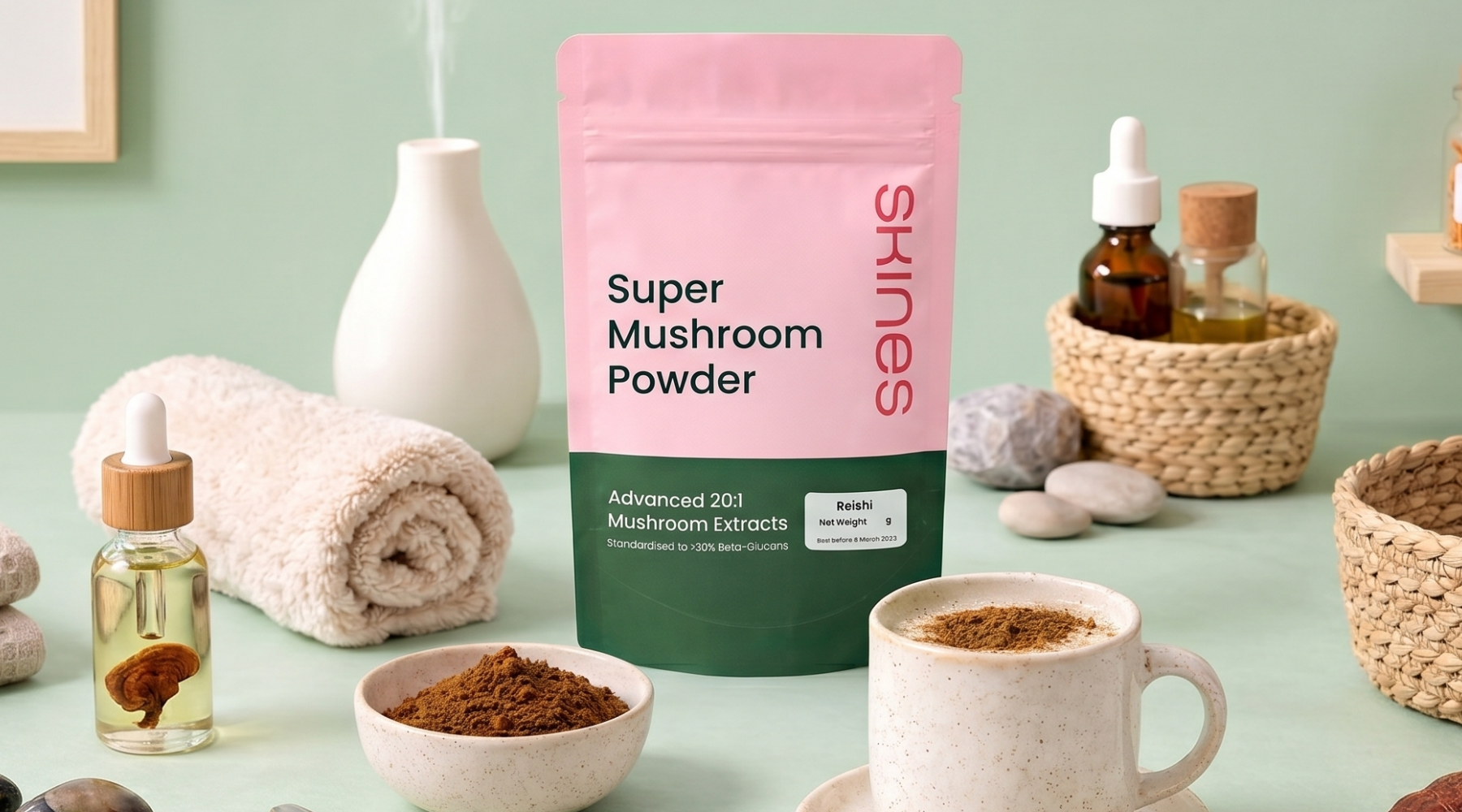
SKINES Super Lion's Mane Powder uses a 20:1 premium fruiting body extract, one of the highest concentration ratios available in the Australian market.
30+
Peer-reviewed studies on Lion's Mane and brain function
20:1
Extract ratio in SKINES Lion's Mane Powder
4–8
Weeks for most users to notice cognitive improvement
NGF
Nerve Growth Factor, what Lion's Mane uniquely stimulates
In this guide
- What is Lion's Mane mushroom?
- The science: how Lion's Mane affects your brain
- What the research actually shows
- Specific benefits: focus, memory, anxiety, and more
- How long does Lion's Mane take to work?
- Why extract quality changes everything
- Lion's Mane vs Reishi vs Turkey Tail
- How to use Lion's Mane powder for best results
- Which mushroom powder is right for you?
- Frequently asked questions
You have probably seen Lion's Mane everywhere lately. In wellness cafés, on supplement shelves, across your social media feed, positioned somewhere between a productivity hack and a miracle of nature. And you are right to be sceptical. The wellness industry has a long history of ingredients that sound extraordinary in marketing copy and disappoint entirely in reality.
Lion's Mane is different. It is one of the most genuinely researched functional mushrooms in existence, with a growing body of peer-reviewed science that gives it real credibility in the cognitive health space. But the way it works, how long it takes, and crucially which products actually contain enough of the right compounds to do anything, that is where most people get misled.
This guide gives you the honest version. The science, the research, the realistic expectations, and what to look for if you decide to try it.
What Is Lion's Mane Mushroom?
Lion's Mane (Hericium erinaceus) is an edible and medicinal mushroom native to North America, Europe, and Asia. It is immediately recognisable, a white, cascading mushroom with long flowing spines rather than a traditional cap and gills. The resemblance to an actual lion's mane is not subtle.
It has been used in traditional Chinese and Japanese medicine for centuries, historically associated with supporting cognitive vitality. Modern science has now given us a much clearer picture of why.
Lion's Mane is the only known natural source of two unique neuroactive compounds: Hericenones (found in the fruiting body) and Erinacines (found in the mycelium). Both compounds directly stimulate the production of Nerve Growth Factor (NGF) in the brain. This single mechanism is the foundation of virtually every cognitive benefit attributed to Lion's Mane.
Most adaptogens work by modulating the stress response, calming the nervous system, reducing cortisol, supporting adrenal function. Lion's Mane does something structurally different: it stimulates Nerve Growth Factor, a protein that regulates the growth, maintenance, and survival of neurons. This makes it the only natural compound known to directly support neuroplasticity and nerve regeneration, the mechanisms that underlie focus, memory, and long-term brain health.
The Science: How Lion's Mane Affects Your Brain
To understand why Lion's Mane has attracted serious scientific attention, you need to understand what Nerve Growth Factor actually does, and why its decline matters.
What Is Nerve Growth Factor (NGF)?
NGF is a protein produced naturally by your body that plays a critical role in the development, maintenance, and survival of neurons. It was first identified in the 1950s by Rita Levi-Montalcini, who received the Nobel Prize in Physiology or Medicine in 1986 for the discovery.
NGF supports the growth of new neural connections, helps maintain the myelin sheath that insulates neurons, and plays a key role in the survival of cholinergic neurons, the specific type that produces acetylcholine, a neurotransmitter directly linked to attention, learning, and memory. Declining NGF levels are associated with poor focus, impaired memory, and accelerated cognitive ageing.
How Lion's Mane Stimulates NGF
Hericenones and erinacines are both small enough to cross the blood-brain barrier. Once there, they stimulate NGF synthesis, particularly in the hippocampus, the brain region most directly associated with memory formation and spatial navigation.
Hericenones and erinacines cross the blood-brain barrier and stimulate NGF synthesis in the hippocampus. More NGF means better neuron maintenance, stronger neural connections, and improved signal transmission. This is the biological foundation of every cognitive benefit Lion's Mane is researched for.
What the Research Actually Shows
This is where honest brands and dishonest ones diverge. Many supplement companies cite animal studies as if they translate directly to human outcomes. Here is an accurate summary of what the human research actually shows.
The honest bottom line on research: The evidence for Lion's Mane is more robust than for most functional mushrooms, but the strongest findings are in adults experiencing mild cognitive impairment rather than peak-performance enhancement in healthy individuals. If you are taking it for general cognitive support, brain fog, and long-term neuroprotection, the biological mechanism is sound even where large-scale trials in healthy populations are still developing.
Specific Benefits: What Lion's Mane Is Actually Supported To Do
Based on the current body of research and the established NGF mechanism, here is what Lion's Mane is most credibly supported to deliver, and realistic timelines for each.
How Long Does Lion's Mane Take to Work?
This is the question most people ask first, and the honest answer is the one most brands avoid giving.
Why Extract Quality Changes Everything
This is the section most Lion's Mane brands do not want you to read carefully. The difference between an effective Lion's Mane supplement and an ineffective one comes down almost entirely to extraction quality, and most products on the market fail this test silently.
Fruiting Body vs Mycelium on Grain
The Lion's Mane mushroom has two main biological components: the fruiting body (the visible white mushroom) and the mycelium (the root-like network beneath the surface). Hericenones are found almost exclusively in the fruiting body. Erinacines are in the mycelium but require specific extraction conditions to be bioavailable.
The majority of inexpensive Lion's Mane supplements use mycelium on grain, mycelium grown on rice or oats, then dried and powdered. The resulting product is largely grain starch with minimal active mushroom compounds. Independent laboratory analyses of popular mycelium-on-grain products have found very low or undetectable levels of hericenones.
Fruiting body extract: not "mycelium," not "whole mushroom," not "mycelium biomass." The fruiting body is where hericenones are concentrated.
Extract ratio: a 20:1 extract means 20kg of raw mushroom was concentrated into 1kg of extract. Higher ratios mean higher active compound concentrations.
Beta-glucan content: a quality extract should specify at least 20% beta-glucans, the immune-active polysaccharides in mushrooms.
No added grain or oats: if the label lists rice or oats as ingredients, the product is mycelium on grain, not a genuine mushroom extract.
The 20:1 Extraction Standard
SKINES Super Lion's Mane Powder uses a premium 20:1 fruiting body extract. This means 20kg of raw Lion's Mane fruiting body is concentrated into every 1kg of the final powder, among the highest concentration ratios available in the Australian functional mushroom market. A single teaspoon delivers meaningful concentrations of hericenones and beta-glucans that less concentrated products simply cannot match.
Lion's Mane vs Reishi vs Turkey Tail: Which Do You Need?
All three mushrooms in the SKINES mushroom range are functional adaptogens, but they work through different mechanisms and serve different primary purposes.
Swipe to see all columns
| Mushroom | Primary mechanism | Best for | Time to notice | When to take |
|---|---|---|---|---|
| Lion's Mane | NGF stimulation, neuroplasticity | Focus, memory, brain fog, cognitive longevity | 4–8 weeks | Morning |
| Reishi | Adaptogenic, cortisol regulation, immune modulation | Stress, sleep quality, daily calm, immunity | 2–4 weeks | Evening |
| Turkey Tail | Prebiotic, gut microbiome support, immune activation | Gut health, immune resilience, overall vitality | 2–6 weeks | Anytime |
| Signature Blend | All three mechanisms combined | Focus, calm, immunity, and skin radiance simultaneously | 2–6 weeks | Morning |
Can you take all three together? Yes, and many SKINES customers do. Lion's Mane, Reishi, and Turkey Tail have complementary mechanisms with no known interactions. Lion's Mane in the morning for cognitive support and Reishi in the evening for stress recovery and sleep is a particularly popular combination. The SKINES Signature Blend includes all three in one convenient daily powder.
How to Use Lion's Mane Powder for Best Results
Which Mushroom Powder Is Right for You?
Use this as your shortcut. Each card links directly to the relevant SKINES product.
Brain fog, focus and cognitive longevity
You struggle with sustained focus, mental fatigue, or want to support long-term cognitive health proactively.
Daily stress and sleep quality
You want to feel calmer, recover better, and sleep more deeply without sedatives or supplements that affect your morning.
Gut microbiome and immune resilience
You want to support gut health, strengthen immune function, and build long-term systemic resilience.
All three benefits in one daily powder
You want comprehensive adaptogenic support without managing multiple products. The ideal starting point for functional mushroom beginners.
Mushrooms and collagen for skin and focus
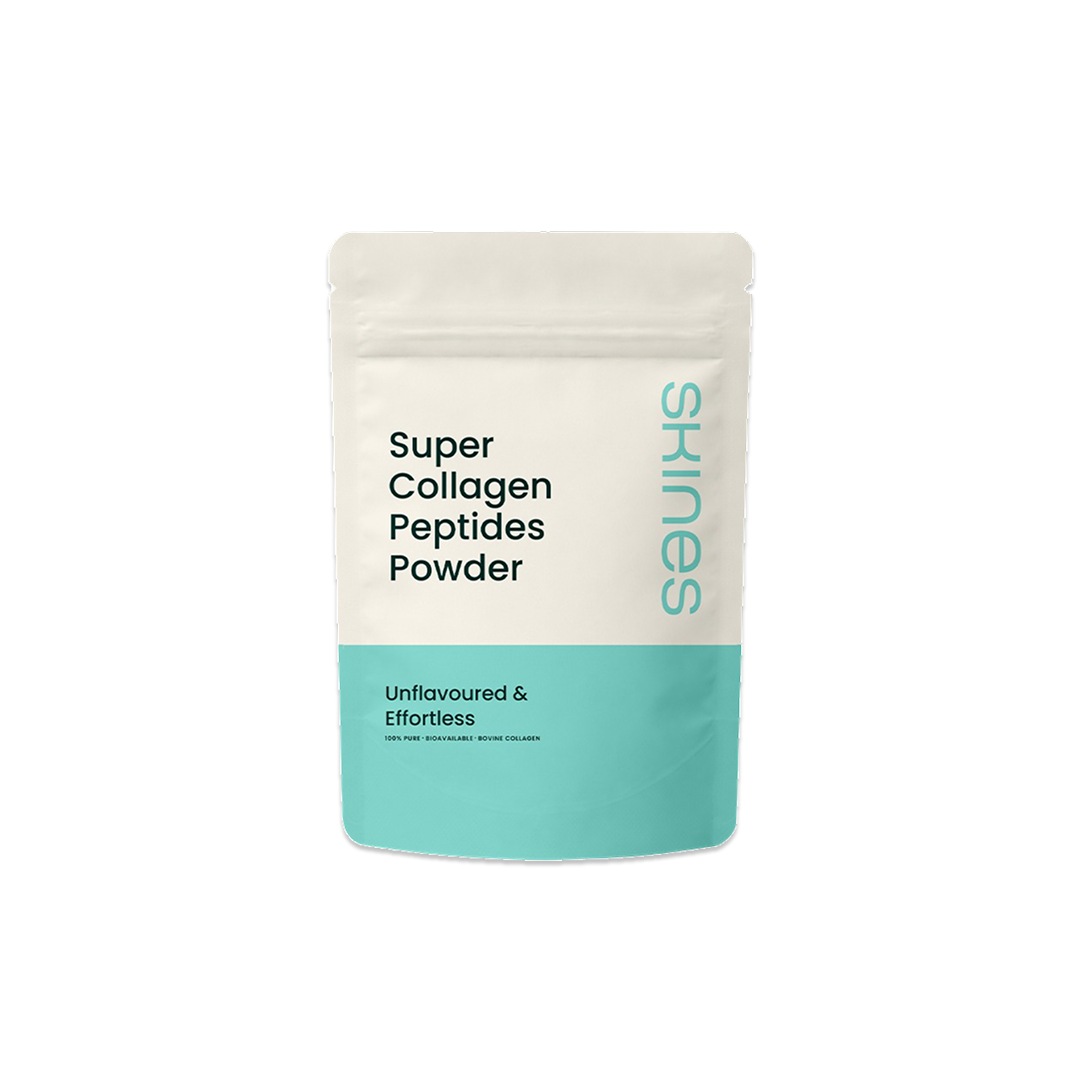
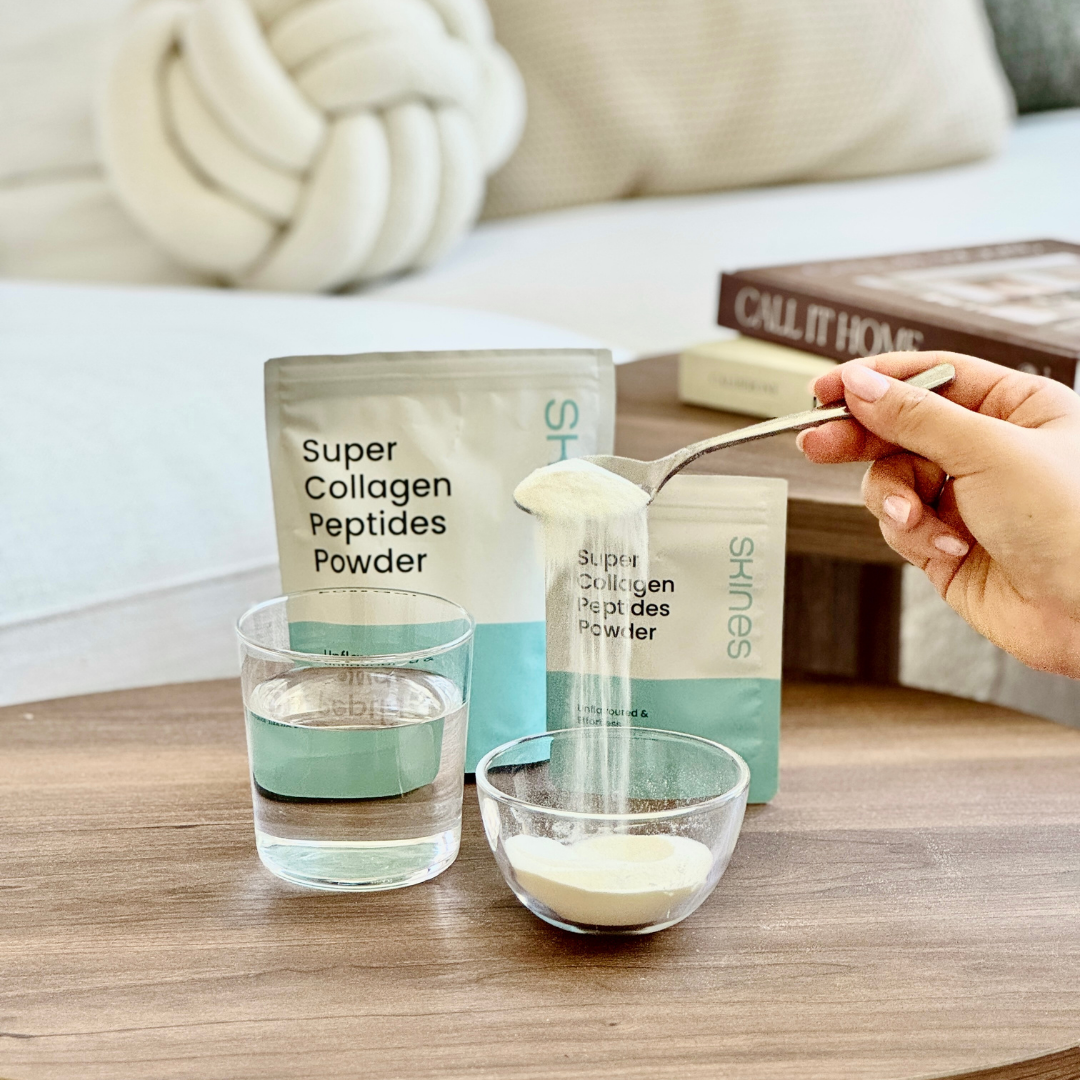
You want to combine adaptogenic brain support with SKINES' collagen skincare system for a complete inside-out wellness routine.
Subscribe and never run out
Consistency is the entire mechanism with Lion's Mane. Subscribe and Save removes the friction of reordering and saves up to 25% on every delivery.
The Honest Verdict
Does Lion's Mane work for focus and brain health? Yes, with two conditions.
First, it works through a cumulative mechanism, not an instant effect. Give it 4 to 8 weeks of daily use before drawing conclusions.
Second, it only works if the product you are using actually contains meaningful concentrations of hericenones and erinacines; which rules out the majority of cheap powders, mycelium-on-grain blends, and under-dosed products on the market.
What Lion's Mane is: a genuinely researched functional mushroom with peer-reviewed evidence for improvements in cognitive function, memory, mood, and neuroprotection, particularly meaningful for anyone experiencing brain fog, mental fatigue, or interested in the long game of cognitive longevity.
What it is not: a quick fix, a stimulant, or a substitute for sleep, good nutrition, and exercise. It is a long-game supplement that rewards consistency and patience.
SKINES Super Lion's Mane Powder uses a 20:1 premium fruiting body extract, the standard that ensures you are getting what the research actually shows works.
Shop SKINES Super Lion's Mane PowderFrequently Asked Questions
Does Lion's Mane actually work for focus?
How long does Lion's Mane take to work?
What does Lion's Mane feel like?
What is the difference between Lion's Mane fruiting body and mycelium?
Can I take Lion's Mane every day?
Can I mix Lion's Mane powder with coffee or matcha?
Can I take Lion's Mane with collagen?
Lion's Mane vs Reishi: which should I choose?
Is Lion's Mane safe? Are there any side effects?
Where can I buy Lion's Mane powder in Australia?

Written by Matthew Youn




Leave a comment
This site is protected by hCaptcha and the hCaptcha Privacy Policy and Terms of Service apply.